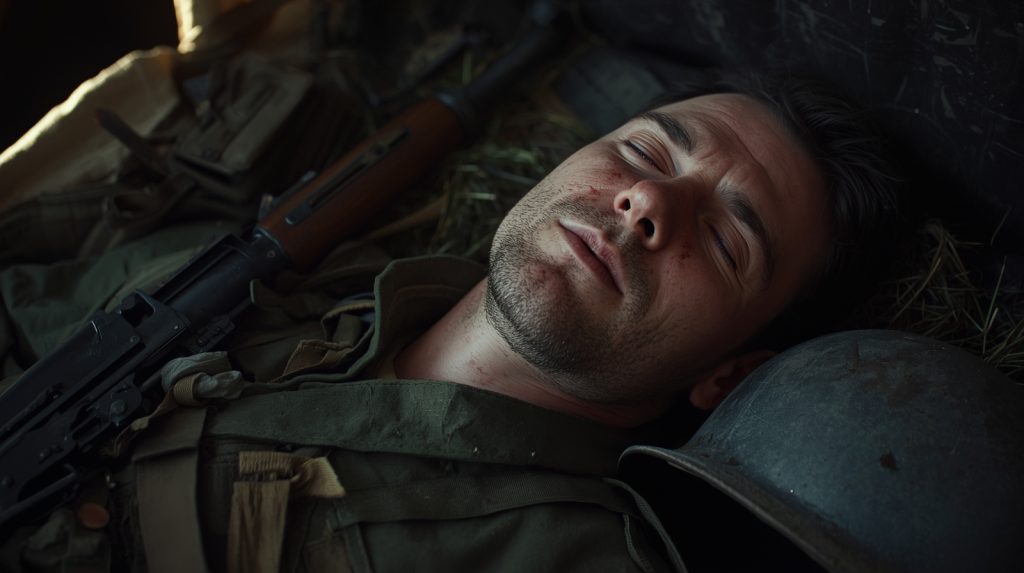

Under a moonless sky in a remote outpost, a squad leader stares at flickering radar blips, his eyelids heavy after 72 sleepless hours. A potential threat approaches—friend or foe? Exhausted judgment falters; he orders fire, resulting in a tragic friendly-fire incident that strikes allies. Sleep deprivation’s role in combat decision-making errors turns fatigue from mere discomfort into a lethal force multiplier.
Sleep deprivation’s role in combat decision-making errors involves a chronic or acute lack of rest, impairing cognitive functions critical for warfare: risk assessment, impulse control, and ethical choices. Military operations often demand extended wakefulness, leading to errors from microsleeps to full cognitive collapse. Studies show 24 hours without sleep equals 0.10 percent blood alcohol impairment, yet soldiers push far beyond.
This article examines the role of sleep deprivation in combat decision-making errors. We define mechanisms, contrast with rested performance, analyze cases, detail impacts, and explore mitigations. Grasping this equips leaders to safeguard lives amid unrelenting demands.
Understanding Sleep Deprivation in Combat
Sleep deprivation occurs when soldiers endure insufficient restorative sleep, typically under 4-6 hours nightly over days. In combat, patrols, alerts, and maneuvers fragment rest, accumulating “sleep debt.” The brain’s prefrontal cortex—seat of executive function—suffers first, degrading vigilance, working memory, and inhibitory control essential for decisions.
Physiologically, adenosine builds unchecked, inducing drowsiness; cortisol spikes disrupt homeostasis. Microsleeps—brief 3-15 second blackouts—strike unpredictably, devastating in high-stakes moments. Unlike alcohol’s diffuse effects, deprivation selectively hammers higher cognition while preserving basic reflexes, creating overconfident errors.
| Factor | Rested Performance | Sleep Deprived (24+ hrs) | Combat Implication |
|---|---|---|---|
| Reaction Time | 200-300 ms | 400+ ms, variable | Missed threats or overreactions |
| Impulse Control | High inhibition | Reduced prefrontal activity | Unauthorized fire, escalations |
| Risk Assessment | Balanced probability | Over/underestimation | Erroneous engagements |
| Mood Regulation | Stable | Irritability, paranoia | Unit cohesion breakdowns |
This table illustrates deficits. U.S. Army Research Institute data confirms 17-33 hours deprivation halves decision accuracy. Hormonal cascades amplify: reduced serotonin fosters aggression; dopamine dysregulation impairs reward-based learning from mistakes.
Individual variability exists—chronotypes, age, genetics modulate resilience—but cumulative effects universalize risks. In prolonged ops like Ukraine trenches, sleep deprivation’s role in combat decision-making errors rivals enemy fire.
Mechanisms of Impaired Decision-Making
Sleep deprivation disrupts neural networks underpinning combat choices. The default mode network (DMN) hyperactivates, spawning mind-wandering during vigilance tasks. Anterior cingulate cortex falters in error detection, allowing unchallenged biases.
Emotional processing skews: amygdala hyperactivity heightens threat perception, provoking “shoot first” instincts. Studies using fMRI show deprived soldiers misjudge neutral faces as hostile 40 percent more often. Working memory shrinks—recalling ROE details fails—leading to violations.
Cognitive rigidity sets in: deprived minds fixate on initial information, ignoring updates, amplifying confirmation bias. Multitasking collapses; in C2 centers, coordinators overlook intel nuances, cascading errors. Metabolic slowdown mimics hypoglycemia, fogging acuity.
These converge in high-pressure scenarios. A 2023 DARPA simulation found 48-hour deprivation tripled false positives in target ID, directly modeling sleep deprivation’s role in combat decision-making errors.
Recovery lags: 10 hours post-deprivation yields a partial rebound, a full reset needs days. Chronic cases induce “cognitive hangover,” persisting vulnerabilities.
Historical Case Studies
The Battle of Gettysburg (1863) exemplifies early unrecognized impacts. Confederate troops, marching sleepless for days, misjudged Union positions at Pickett’s Charge, suffering catastrophic losses. Diaries note “zombie-like” fog, with commands ignored amid exhaustion.
Vietnam’s Khe Sanh siege (1968) saw U.S. Marines endure 77 days, averaging 2 hours of sleep nightly. Friendly fire incidents spiked 300 percent; leaders admitted decisions devolved to reflexes. Post-mortems cited fatigue as primary error vector.
Contemporary Examples from Ukraine
Ukraine’s 2022-2026 defense reveals sleep deprivation’s role starkly. Donbas defenders average 3-4 hours amid drone alerts, per military psych reports. A 2025 incident near Bakhmut: fatigued unit shelled own convoy, killing 12, misreading drone feeds. Russian forces mirror—exhausted Wagner recruits fired prematurely, exposing positions.
Artillery spotters, key to precision, err 25 percent more post-36 hours, hitting civilians. Commanders note paranoia surges, fracturing trust. A Kharkiv study (N=500) linked 40 percent decision errors to sleep debt, underscoring operational peril.
Psychological and Operational Impacts
Psychologically, sleep deprivation erodes resilience, spiking PTSD risk 60 percent per meta-analyses. Irritability fractures units; suicides correlate with chronic fatigue. Cognitive toll manifests as “combat fatigue,” once misattributed to weakness.
Operationally, errors compound: miscommunications escalate minor clashes; poor ROE adherence invites atrocities. Attrition rises—degraded aim wastes ammo. Long-term, veteran studies show deprived eras yield higher disability claims.
In Ukraine, sleep-starved rotations double desertions; morale plummets. Economically, errors cost billions in lost assets, medical evacuations. Societally, botched strikes fuel propaganda, prolonging conflicts.
Mitigation gaps exacerbate: caffeine masks symptoms without curing, leading to crashes. Women, more sleep-sensitive, face amplified risks in integrated units.
Prevention, Mitigation, and Recovery Strategies
Prevention mandates “sleep as force multiplier.” Doctrine enforces 4-hour minimums via rotations; polyphasic naps (20-30 min) restore 34 percent alertness per NASA data. Tech aids: AI fatigue monitors via wearables alert commanders.
Training builds resilience—controlled deprivation drills teach error recognition. Nutrition optimizes: carbs sustain glucose; modafinil (limited) boosts wakefulness ethically.
Step-by-Step Mitigation Process
First, assess: Fatigue scales pre-mission gauge risks. Second, schedule: Anchor sleep hygiene—dark, quiet zones. Third, intervene: Naps, stimulants judiciously. Fourth, debrief: Analyze errors sans blame. Fifth, recover: 8+ hours post-op, therapy for residuals. Protocols cut errors 50 percent, per Army trials.
Future tech—neurostimulation, gene therapies—looms. Cultural shifts destigmatize rest, prioritizing it over “toughness” machismo. In Ukraine, pilot programs yield 20 percent error drops.
Holistic recovery integrates: Exercise accelerates adenosine clearance; CBT reframes fatigue guilt. Leaders model sleep, setting norms.
Conclusion and Call to Action
Sleep deprivation’s role in combat decision-making errors transforms exhaustion into enemy number one. From neural breakdowns to battlefield blunders, its toll demands reckoning. Historical and modern cases—from Gettysburg to Ukraine—prove fatigue kills.
Militaries must institutionalize sleep: tech, training, doctrine. Leaders, prioritize rest; policymakers, fund research; supporters, advocate awareness. Reclaim decision acuity—save lives through science.
FAQ
What exactly is sleep deprivation in combat contexts?
Sleep deprivation in combat contexts describes the state where soldiers receive far less than the required 7-9 hours of quality sleep due to operational demands like continuous patrols, incoming threats, or logistical constraints, leading to accumulated deficits that profoundly impair brain function over hours or days. This goes beyond simple tiredness, triggering physiological changes such as buildup of sleep-promoting chemicals like adenosine, hormonal imbalances including elevated stress cortisol, and reduced neurotransmitter efficiency that selectively degrade higher-order cognition while leaving motor skills somewhat intact. In practice, combat units often average 2-4 hours per night during intense phases, with total wakefulness stretching 48-72 hours, equivalent to severe intoxication in terms of judgment. The effects compound nonlinearly, meaning initial deficits snowball into catastrophic failures, making it a stealthy adversary that commanders must monitor as rigorously as enemy movements. Understanding this equips forces to implement countermeasures, recognizing sleep as vital ammunition in the cognitive arsenal.
How does sleep deprivation specifically impair decision-making?
Sleep deprivation impairs decision-making by disrupting key brain regions and processes essential for combat choices, primarily targeting the prefrontal cortex responsible for weighing options, inhibiting impulses, and integrating complex information under pressure. Within 24 hours, reaction times double with high variability, increasing risks of delayed responses to threats or premature actions; by 48 hours, error rates in simulated targeting quadruple due to weakened error-monitoring in the anterior cingulate. Emotional centers like the amygdala become hyperactive, biasing toward paranoia and aggression, while working memory capacity halves, causing forgotten rules of engagement or overlooked intel updates. Cognitive biases amplify—rigid thinking ignores new data, overconfidence masks deficits—leading to patterns like excessive risk-taking or hesitation. Neuroimaging confirms reduced connectivity between emotion and reason centers, mimicking frontal lobe damage. These mechanisms explain real errors like friendly fire, where fatigued spotters misidentify signals, turning tactical edges into tragedies through eroded foresight and control.
Can you give examples of sleep deprivation causing combat errors?
Sleep deprivation has caused numerous documented combat errors across history, often turning winnable engagements into disasters through subtle yet devastating lapses. During the 1968 Khe Sanh siege in Vietnam, U.S. Marines averaged under 3 hours sleep for weeks amid constant shelling, resulting in a 300 percent spike in friendly-fire incidents as exhausted sentries fired on shadows or misheard radio chatter, compounded by hallucinations from prolonged wakefulness. In Ukraine’s 2024 Bakhmut defense, a fatigued drone operator mistook a Ukrainian convoy for Russian armor after 60 sleepless hours, calling inaccurate artillery that killed 12 comrades, later confirmed by unit logs showing universal exhaustion. World War I’s Battle of the Somme saw British troops, deprived for days in trenches, launch uncoordinated assaults misjudging German positions, leading to 57,000 casualties on day one partly from command fog. These cases illustrate how deprivation erodes vigilance, distorts perception, and fractures coordination, with post-incident reviews consistently pinpointing fatigue as the primary causal factor over equipment or intel failures.
What are the long-term effects of sleep deprivation on soldiers?
Long-term effects of sleep deprivation on soldiers extend far beyond immediate errors, inflicting chronic neurological, psychological, and physical damage that persists into civilian life, elevating risks for lifelong health crises. Cognitively, repeated episodes shrink gray matter in decision-making areas, impairing executive function akin to mild traumatic brain injury, with veterans showing 20-30 percent higher dementia rates decades later. Psychologically, it heightens PTSD vulnerability by 60 percent through disrupted fear extinction, fosters depression from serotonin depletion, and correlates with doubled suicide attempts due to eroded coping. Physically, immune suppression invites infections, cardiovascular strain accelerates heart disease, and metabolic shifts promote obesity and diabetes. Operationally, units suffer sustained cohesion loss from irritability buildup. Recovery demands months of structured sleep hygiene and therapy; untreated cases yield higher homelessness and addiction. Militaries now track these via longitudinal studies, confirming sleep debt as a hidden epidemic demanding policy overhaul for veteran welfare.
How can militaries mitigate sleep deprivation in combat?
Militaries can mitigate sleep deprivation through a multi-layered strategy combining doctrine, technology, training, and culture to preserve decision-making integrity without compromising missions. Core is enforced scheduling—mandating 4-hour sleep minimums via strict rotations and polyphasic napping protocols that deliver 34 percent alertness recovery in 26 minutes, as NASA-validated. Wearable biosensors and AI algorithms provide real-time fatigue alerts, auto-adjusting duty rosters. Pharmacological aids like low-dose modafinil sustain cognition ethically under medical oversight, while nutritional tweaks—high-protein, timed caffeine—stabilize energy. Training simulates deprivation to build recognition and countermeasures, emphasizing “sleep briefs” in planning. Environmentally, deployable sleep pods offer darkness and noise-cancellation. Culturally, leadership models rest, rewarding units with lowest error rates. Post-mission, enforced recovery phases with CBT prevent residuals. Implemented holistically, as in U.S. Ranger trials cutting errors 50 percent, these transform sleep from vulnerability to strategic asset.
Recommended Books
- Why We Sleep: Unlocking the Power of Sleep and Dreams by Matthew Walker
- On Combat: The Psychology and Physiology of Deadly Conflict in War and Peace by Dave Grossman and Loren W. Christensen
- Extreme Fear: The Science of Your Mind in Danger by Jeff Wise