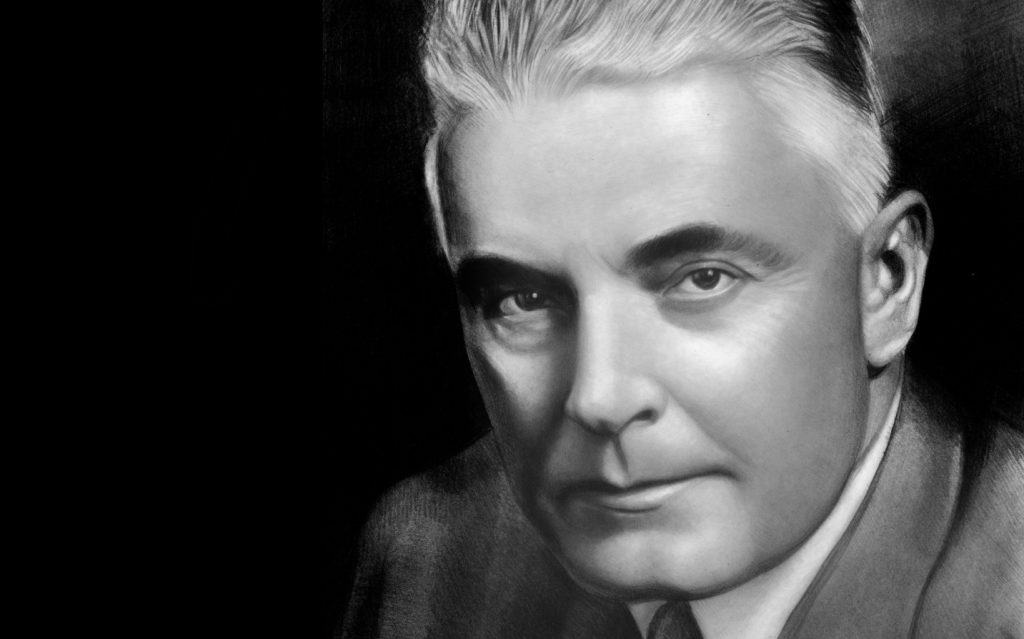

Among the innovators of modern psychotherapy, few possess a personal story as dramatic and inspiring as Milton Hyland Erickson. Widely regarded as the founding father of modern hypnotherapy, strategic family therapy, and brief therapy, Erickson transformed clinical hypnosis from an authoritative, rigid parlor trick into an adaptable, deeply respectful therapeutic art. Yet, Erickson’s remarkable ability to induce trance states and read the subtlest nuances of human behavior was not learned in a university lecture hall or from a traditional medical textbook; it was forged through extreme personal suffering, paralysis, and acute bodily observation.
Colorblind, tone-deaf, dyslexic, and twice struck down by polio, Erickson faced physical limitations that would have broken most individuals. Instead, he used his severe physical impairments as an unprecedented psychological laboratory. By examining his recovery from total paralysis through self-hypnosis, his uncanny talent for reading body language and micro-expressions, and his revolutionary development of indirect, conversational hypnosis, a portrait emerges of a medical pioneer who turned his own body’s weakness into a monumental contribution to modern psychiatry.
The Paralyzed Observer: Turning Illness into Insight
Milton Erickson’s life was defined from early childhood by unique perceptual challenges. Born in 1901 in a Nevada mining town and raised on a farm in Wisconsin, Erickson grew up with congenital colorblindness (seeing primarily the color purple), severe dyslexia, and an inability to perceive musical rhythm or tone. These early sensory differences forced him to pay extraordinarily close attention to the visual world around him, developing a keen eye for subtle patterns, spatial relationships, and physical movements that others routinely overlooked.
The turning point in Erickson’s life came in 1919, when he was seventeen. He was stricken with a severe case of poliomyelitis that paralyzed his entire body from the neck down, leaving him capable of moving only his eyes and speaking with great difficulty. Three doctors visited the family farm and bluntly informed his mother that her son would be dead by morning. Refusing to surrender to this terminal diagnosis, young Erickson asked his mother to shift his bed so he could see out the bedroom window, using his fierce mental will and visual focus to survive the night.
The Bedroom Laboratory and Micro-Expression Mastery
Although he survived the acute infection, Erickson remained totally bedridden and paralyzed, unable to interact normally with his family. Isolated inside his motionless body, he transformed his bedroom into an observational laboratory. For hours every day, he sat silently, watching his parents and eight siblings interact. Because he could not join their conversations, he stopped focusing on the words people spoke and began studying their nonverbal cues: subtle shifts in breathing patterns, pupil dilation, small twitches of facial muscles, micro-expressions, and contradictions between verbal statements and physical posture.
Erickson discovered that people frequently said one thing with their voices while revealing their true, subconscious feelings through subtle, involuntary bodily movements. He learned to read human body language with astonishing precision, realizing that the body continuously broadcasts unconscious thoughts. This period of enforced stillness provided Erickson with a foundational insight that would later define his clinical practice: that the unconscious mind is constantly communicating, and that an observant therapist can read these subtle signals to understand a patient’s hidden psychological reality.
Ideomotor Learning: Retraining the Body Through Mental Trance
As Erickson lay paralyzed in his bed, he became obsessed with the desire to move again. Lacking physical muscle strength, he turned to the power of intense mental imagery and self-hypnosis. He remembered playing on a rocking chair as a young child and began visualizing the sensation of rocking with intense, detailed focus. He did not simply imagine looking at a chair; he mentally recreated the internal, somatic memories of muscle tensions, joint movements, and balance adjustments associated with rocking.
Through this intense mental effort, Erickson tapped into what is known as ideomotor movement—the phenomenon where vivid mental imagery produces tiny, involuntary muscular contractions. After weeks of focusing on these deep motor memories, he noticed tiny twitches in his muscles. Day after day, he systematically applied this mental rehearsal to every part of his body, mentally practicing walking, reaching, and grasping until his nervous system began reconnecting with his dormant muscles. Gradually, movement returned to his arms, legs, and torso, allowing him to sit up, stand, and eventually walk with crutches.
The Canoe Voyage of Self-Rehabilitation
To complete his physical rehabilitation and prove the power of human endurance, nineteen-year-old Erickson undertook an extraordinary solo journey in the summer of 1922. Armed with only a lightweight canoe, a small supply of food, and a handful of dollars, he set out on a grueling, 1,200-mile solo canoe trip down the Rock River and Mississippi River. At the start of the trip, he was so weak he could barely lift the paddle or get into the boat without assistance.
Over months of hard physical labor, navigating treacherous river currents, camping alone on riverbanks, and pulling his canoe over sandbars, Erickson rebuilt his physical strength through sheer determination and natural exercise. By the end of the summer, he returned home transformed: physically robust, deeply confident, and possessing a profound, experiential understanding of how the mind can influence, heal, and rebuild the physical body. This triumphant recovery cemented his lifelong conviction that human beings possess vast, untapped internal resources to overcome seemingly impossible obstacles.
Ericksonian Hypnosis: The Indirect Revolution
After completing his medical degree and psychiatric training, Erickson entered a field where hypnosis was largely viewed with skepticism or treated as a rigid, authoritarian procedure. Traditional hypnotists used direct commands, insisting that patients fall asleep or obey suggestions. Erickson recognized that this heavy-handed approach frequently triggered psychological resistance, especially in stubborn, highly intellectual, or deeply traumatized patients.
Drawing on his lifelong observations of human communication, Erickson revolutionized the field by inventing indirect, conversational hypnosis—now known as Ericksonian Hypnosis. Instead of inducing a formal trance with swinging pocket watches or stern commands, Erickson slipped patients into deep hypnotic states through ordinary conversation, storytelling, complex metaphors, and subtle vocal shifts. He realized that trance is a natural, everyday state of focused internal attention that people experience routinely while daydreaming, reading a book, or driving down a highway.
Utilization and Metaphor: Meeting the Patient’s Reality
A core pillar of Erickson’s therapeutic philosophy was utilization. Rather than trying to change or fight a patient’s symptoms, resistance, or rigid beliefs, Erickson accepted and utilized whatever the patient brought into the consulting room. If a patient was stubborn, paranoid, or overly controlling, Erickson incorporated those exact traits directly into the therapeutic strategy, using their own behavioral patterns to guide them toward positive psychological change.
Erickson was also a master storyteller, utilizing carefully constructed tales and therapeutic metaphors to bypass the conscious mind’s logical defenses. By telling a story about a farm animal, a river, or another patient, he let the patient’s subconscious mind draw its own connections and discover internal solutions without feeling ordered or analyzed. His famous paradoxes, double binds, and unexpected assignments often disrupted a patient’s habitual thinking, creating rapid breakthroughs where traditional long-term therapy had failed.
Living with Pain: The Second Attack of Polio
In 1952, at the age of fifty-one, disaster struck Erickson a second time: he contracted a second, different strain of polio. This second infection inflicted severe, permanent damage on his body, confining him to a wheelchair for the remainder of his life, paralyzing his right arm, severely weakening his respiratory system, and leaving him in constant, chronic physical pain. Many medical experts were amazed that he survived the second attack at all.
Faced with unrelenting physical suffering, Erickson practiced precisely what he taught his patients. Refusing to take heavy narcotic painkillers that would dull his sharp intellectual mind, he used self-hypnosis, sensory distraction, and altered states of consciousness to manage his severe pain. He noticed that focusing intensely on a compelling project, observing a patient, or engaging in creative writing caused the brain to filter out pain signals, demonstrating that attention is the ultimate governor of physical sensation.
The Wizard of Phoenix
Operating out of a small, modest home office in Phoenix, Arizona, the wheelchair-bound Erickson spent his final decades treating patients and training a generation of world-renowned therapists, family counselors, and authors. Psychologists from across the globe traveled to Phoenix to observe “The Wizard of Phoenix” conduct therapy sessions that seemed almost miraculous in their speed and effectiveness.
Despite his severe physical limitations—speaking with a raspy, weak voice and possessing limited mobility—Erickson’s observational powers remained sharp until his death in 1980. He continued to demonstrate that a therapist’s greatest tool is not an imposing physical presence or rigid diagnostic manuals, but an absolute, empathetic presence, an eye for non-verbal truth, and an unwavering faith in the patient’s inherent capacity to heal.
Conclusion: The Legacy of Adaptive Genius
Milton Erickson’s life stands as an extraordinary testament to the human spirit’s ability to transcend catastrophic physical limitations and convert personal adversity into scientific genius. The severe polio that threatened to end his life at seventeen became the very catalyst that awakened his miraculous observational powers and birthed a whole new era of modern psychotherapy.
By shifting hypnotherapy away from rigid commands and toward indirect, creative, and highly individualized communication, Erickson humanized clinical psychiatry. He taught the world that the unconscious mind is not a dark basement filled with repressed conflicts, but a rich, wise reservoir of creative solutions waiting to be unlocked. Milton Erickson did not merely study psychology; he lived it through every muscle, breath, and recovery, leaving behind a legacy that continues to empower therapists and patients around the globe.
FAQ About Milton Erickson and Ericksonian Hypnosis
How did Milton Erickson use self-hypnosis to recover from polio?
Milton Erickson used self-hypnosis and vivid mental imagery to trigger ideomotor responses in his paralyzed muscles after his first bout with polio. Unable to move, he spent weeks intensely recalling and visualizing the internal physical sensations of movement, such as riding a rocking chair or walking. This intense mental focus stimulated tiny, involuntary muscle contractions, helping his nervous system gradually rebuild connections with his dormant muscles and aiding his physical recovery.
What is the main difference between traditional hypnosis and Ericksonian hypnosis?
Traditional hypnosis relies on direct, authoritative commands and formal induction procedures, telling the subject to sleep or perform specific actions. Ericksonian hypnosis uses an indirect, conversational approach that utilizes stories, metaphors, open-ended suggestions, and subtle vocal shifts to guide the patient into a natural trance state. Erickson believed that indirect suggestions bypass the conscious mind’s resistance, allowing the patient’s subconscious to find its own personal solutions.
What is the principle of utilization in Erickson’s therapy?
The principle of utilization is a core concept in Ericksonian therapy where the clinician accepts and incorporates everything the patient presents—including their symptoms, resistance, unusual beliefs, or personality traits—directly into the therapeutic process. Instead of fighting or trying to eliminate a patient’s defense mechanisms, Erickson used those exact behaviors as tools to construct customized interventions that led to positive psychological change.
How did Erickson manage his chronic pain in his later years?
After surviving a second attack of polio at age fifty-one, Milton Erickson suffered from constant, severe muscle pain and paralysis. He managed his pain without heavy narcotic medications by using self-hypnosis and altered states of awareness. He applied techniques such as sensory displacement, deep mental focus on compelling work, and altering his perception of time, proving that focusing conscious attention elsewhere can dramatically reduce the brain’s processing of physical pain signals.
Was Milton Erickson able to read micro-expressions?
Yes, Milton Erickson developed an extraordinary ability to read micro-expressions, body language, and non-verbal cues during the months he lay completely paralyzed in bed as a teenager. Unable to speak or move, he spent his days observing his family members, noticing subtle contradictions between their spoken words and tiny physical shifts, such as pupil dilation, breathing changes, and muscle twitches. This great observational skill became a cornerstone of his clinical practice.
Recommended Books on Milton Erickson
- My Voice Will Go with You: The Teaching Tales of Milton H. Erickson by Sidney Rosen
- Uncommon Therapy: The Psychiatric Techniques of Milton H. Erickson, M.D. by Jay Haley
- Hypotherapy: An Exploratory Casebook by Milton H. Erickson and Ernest L. Rossi
- Taproots: Underlying Principles of Milton Erickson’s Therapy and Hypnosis by William Hudson O’Hanlon
- The Practical Application of Medical and Dental Hypnosis by Milton H. Erickson, Seymour Hershman, and Irving I. Secter