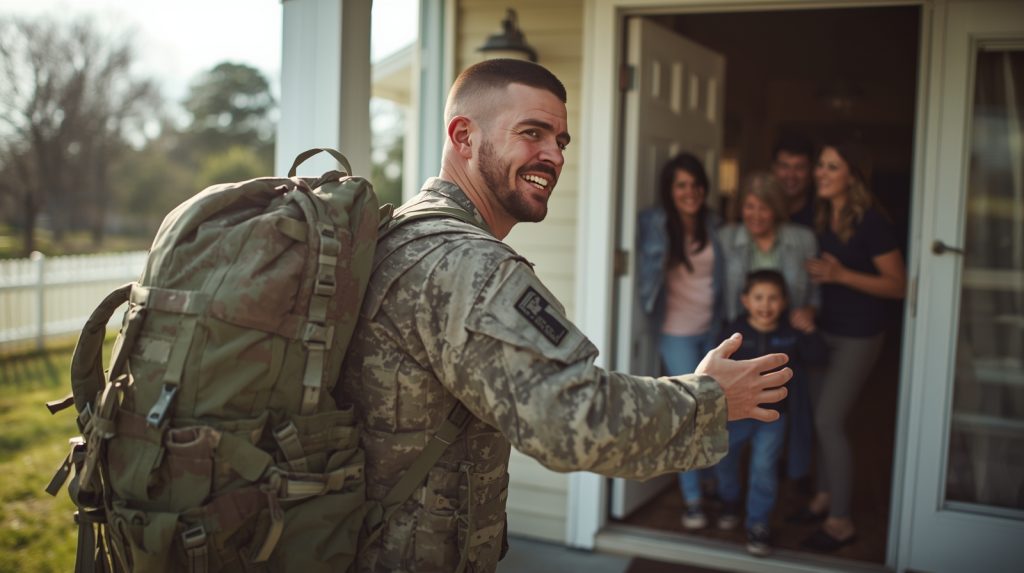

When veterans return home from deployment, they step into a different kind of battleground: the family living room, where reintegration challenges strain bonds forged in absence. Up to 60% of returning veterans report marital discord, with divorce rates doubling civilian norms within five years. Altered family dynamics emerge from trauma’s shadow—hypervigilance clashes with children’s needs, emotional numbing erodes intimacy, and role reversals breed resentment. These struggles compound PTSD, isolation, and relapse risks.
From U.S. post-Afghanistan waves to Ukrainian homecomings amid ongoing war, reintegration demands navigating invisible minefields. This article probes psychological roots, historical contexts, core challenges in family dynamics, long-term consequences, and proven support strategies. Healing families fortifies veterans’ recoveries.
Psychological Foundations of Reintegration Challenges
Reintegration friction stems from deployment-induced changes clashing with home stasis. Combat rewires brains: heightened amygdala sensitivity sparks irritability toward normal stimuli like doors slamming. Prefrontal inhibition falters, impairing impulse control in arguments. Attachment theory explains: prolonged separations disrupt secure bases, fostering anxious or avoidant patterns.
Moral injury manifests as withdrawal, unable to share “unshareable” experiences. Spouses face secondary trauma from absorbed stress, developing vicarious PTSD. Children experience ambiguous loss—parent physically present but emotionally absent—triggering behavioral regressions. Oxytocin deficits hinder bonding, while cortisol legacies perpetuate vigilance. These dynamics reveal reintegration as relational recalibration.
Prevalence data alarms: 50% couples therapy uptake among vets, per VA stats; Ukrainian surveys show 45% family conflicts post-rotation.
Historical Evolution and Reintegration Data
Post-WWII “welcome home” parades masked 30% divorce spikes. Vietnam’s hostile receptions amplified isolation, with 70% familial estrangement. Gulf War introduced multiple-deployment strains. Digital era enables contact but heightens mismatch expectations.
Current metrics: U.S. vets 2.1x divorce risk; Ukraine 2024 data 55% relationship breakdowns amid partial returns. Longitudinal studies track 40% chronic discord.
| Era/Conflict | Divorce Rate Increase | Key Dynamic |
|---|---|---|
| Post-WWII | 30% | Role rigidity |
| Vietnam | 70% estrangement | Stigma, silence |
| Iraq/Afghanistan | 2x civilian | Multiple tours |
| Ukraine Ongoing | 55% | Uncertain returns |
Patterns demand tailored interventions.
Core Challenges in Family Dynamics for Veterans
Role reversals dominate: spouses habituated to leadership resent reclaimed authority; veterans feel emasculated by lost provider status. Parenting gaps yield discipline clashes—vets’ military precision versus civilian flexibility. Intimacy voids persist: hypersexuality or aversion from trauma disrupts connection.
Communication breakdowns abound—stoic silences meet frustration. Children exhibit acting out, loyalty binds, or parentification. Extended family meddling exacerbates. In Ukraine, hybrid returns amid alerts perpetuate “half-home” limbo. Substance cycles infect households. These interplay as feedback loops, entrenching dysfunction.
Long-Term Consequences of Reintegration Failures
Unaddressed challenges cascade: chronic isolation doubles suicide risk; children inherit anxiety, with 30% intergenerational PTSD. Economic hits from job instability compound via spousal employment strains. Community withdrawal fosters veteran enclaves, stalling societal bonds.
Decades on, empty nests reveal delayed grief; aging vets face amplified loneliness. Ukrainian projections warn of “war orphan” generations. Positive flipside: successful reintegration buffers resilience, modeling growth. Stakes underscore urgency.
Strategies and Support for Successful Reintegration
Evidence-based strategies center couples therapy like EFT, rebuilding attachment in 75% cases. Family-focused CBT normalizes dynamics, teaches validation. Transition programs pair mentors, easing role shifts. Parenting classes bridge gaps; intimacy workshops via sensate focus revive bonds.
VA’s REACH vets screens risks proactively. Peer networks demystify struggles. Policy expansions fund family leave, childcare. Digital apps track progress; Ukraine’s community hubs integrate returns. Multi-modal support yields 40% stability gains, per RCTs.
Holistic nourishment—shared rituals, pets—cements gains.
Conclusion
Family dynamics and reintegration challenges test returning veterans’ mettle anew, but targeted support transmutes trials into triumphs. Prioritizing familial healing sustains warriors’ legacies, weaving war’s threads into resilient tapestries.
FAQ
What causes the most common reintegration challenges for veterans?
Most reintegration challenges arise from mismatched expectations, trauma-altered behaviors, and disrupted roles after prolonged absences. Hypervigilance translates to overprotectiveness, clashing with family norms; emotional numbing stifles intimacy. Spouses’ independence sparks power struggles. Data from VA studies show 60% cite communication failures, rooted in unshared war narratives and secondary traumatization, forming vicious cycles without intervention.
How does PTSD affect family dynamics upon return?
PTSD disrupts family dynamics through irritability, withdrawal, and hyperarousal, eroding trust and routines. Flashbacks interrupt presence; avoidance skips family events. Partners develop compassion fatigue; children mirror dysregulation. Longitudinal research indicates 50% higher conflict, but conjoint therapy restores equilibrium by normalizing symptoms and fostering empathy bridges.
What role reversals occur in veteran families?
Role reversals see spouses assuming breadwinner/decision-maker duties during absence, resisting veterans’ reassertion. Veterans grapple with civilian irrelevance, breeding resentment. Children accelerate maturity, resenting regression. Ukrainian cases highlight interim matriarchies clashing with patriarchal returns. Counseling reframes as team evolution, smoothing transitions.
Can children of returning veterans develop their own trauma?
Yes, children develop secondary trauma via behavioral cues, inconsistent parenting, and domestic tension, manifesting as anxiety, aggression, or academic drops. 25-35% show symptoms per studies, amplified by glorifying war tales. Interventions like filial therapy empower dialogue, mitigating transmission and harnessing family resilience.
What support programs help with veteran family reintegration?
Programs like VA’s Family Reintegration track record 40% discord reductions via workshops. Military OneSource offers free counseling; UK’s SSB provides phased returns. Evidence favors multi-family groups normalizing experiences. Policy pushes include paid transition leave, proving cost-effective for long-term stability.
Recommended Books
- After the Tears: Helping Adult Children of Alcoholics Heal Their Childhood Trauma by Jane Middelton-Moz
- Coming Home to Stress: Reintegration Challenges for Military Families by Colleen Birdnow
- Strengthening Military Families: A Guide for the Command Suite by United States Army
- The Returning Warrior Project: Reintegration Guide by VA
- Loving Someone with PTSD: A Practical Guide by Aphrodite T. Matsakis
- War and Family Solidarity by R. Wayne Eisenhart