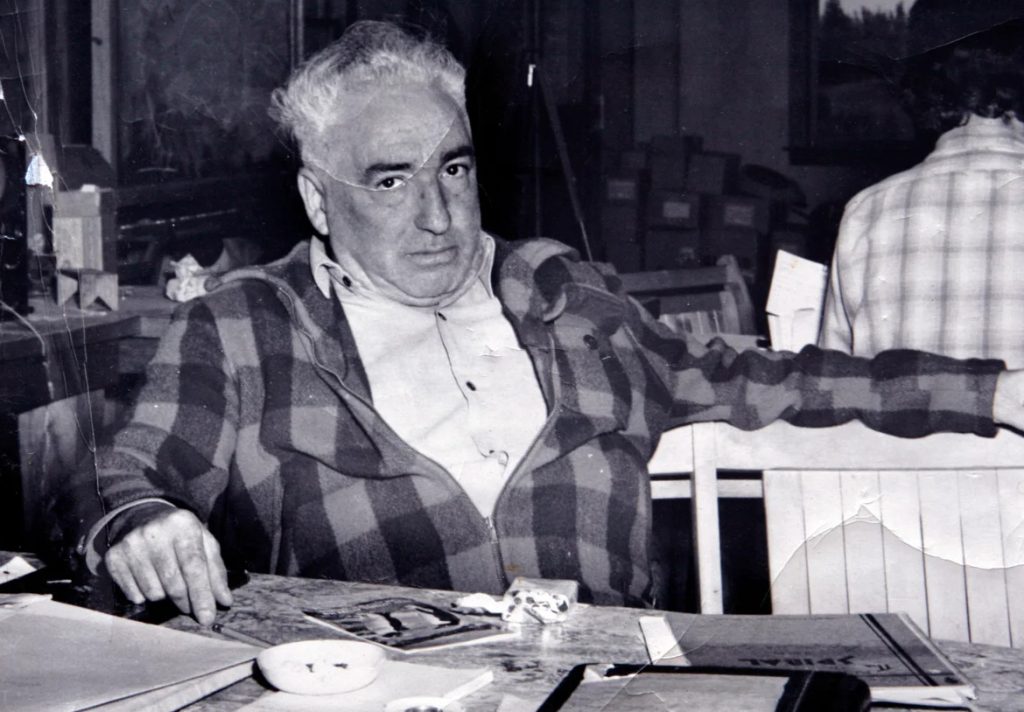

Few figures in the history of science and medicine bridge the gap between a brilliant psychiatric pioneer and a persecuted, tragic figure quite like Wilhelm Reich. Originally a star pupil of Sigmund Freud in 1920s Vienna, Reich made enduring contributions to psychoanalysis, pioneering character analysis and bodily somatic techniques that laid the groundwork for modern body-oriented psychotherapy. However, Reich was never content to remain strictly within the boundaries of conventional medical science. Driven by an intense desire to find the physical root of emotional health, his career became an extraordinary search for a universal energy force he believed governed all living matter.
Reich’s radical journey led him from mainstream psychoanalytic clinics to building strange accumulator boxes meant to trap cosmic life energy, constructing cloudbusting devices aimed at altering the weather, and engaging in intense legal battles with the United States government. Rather than viewing the mind and body as separate, Reich believed that physical muscle tension, emotional trauma, and universal energy were inextricably linked. Exploring Reich’s descent into fringe science, his controversial inventions, and his tragic demise reveals a captivating story about the fine line between genius, obsession, and societal panic.
From Psychoanalytic Prodigy to Body Armor: Reich’s Early Breakthroughs
Wilhelm Reich began his career as one of the psychoanalytic movement’s brightest young minds. Recognized early by Sigmund Freud for his sharp intellect, Reich was appointed director of the Vienna Seminar for Psychoanalytic Therapy while still in his twenties. However, Reich quickly began to depart from Freud’s purely talk-based therapy, observing that patients often used verbal intellect to hide their underlying emotional pain. Reich realized that emotional trauma was not merely stored in the mind as repressed memories, but was physically locked into the body’s muscular structure.
To address this, Reich developed his groundbreaking concept of character armor and somatic muscular tension. He argued that chronic physical tightness—such as a clenched jaw, rigid shoulders, or restricted breathing—was the body’s physical defense mechanism against unexpressed emotions and traumatic experiences. Unlike classical analysts who sat silently behind a reclining patient, Reich took an active, physical approach to therapy. He touched his patients, worked on their breathing patterns, and directly manipulated tight muscles to release suppressed emotional energy, inventing the field of body psychotherapy long before it gained modern clinical acceptance.
The Discovery of Bions and the Transition to Biology
Driven to find the physical substance behind emotional energy, Reich transitioned from traditional psychiatry into biological research during his exile in Norway in the late 1930s. Using powerful optical microscopes, Reich began studying microscopic culture preparations of organic matter, such as grass, blood, and earth. He claimed to observe tiny, glowing blue vesicles that emerged as organic matter decayed, which he named bions. Reich asserted that these bions were microscopic units of biological life energy transitioning between non-living and living states.
Reich believed that these bions emitted a mysterious, previously undiscovered form of radiation. When he noticed that these culture preparations caused skin burns and affected nearby electrical equipment, he concluded that he was no longer looking at simple biological matter, but had stumbled upon a fundamental, primary energy force that animated all nature. This controversial claim shocked the traditional scientific community in Europe, prompting fierce newspaper campaigns against him and forcing Reich to pack up his laboratory equipment and emigrate to the United States in 1939 on the eve of World War II.
The Orgone Accumulator: Trapping Cosmic Energy in a Box
Upon arriving in the United States, Reich settled in Rangeley, Maine, where he established a research compound named Orgonon. It was here that he formally announced his discovery of Orgone—a non-electromagnetic, universal life energy that he claimed saturated the atmosphere, filled the cosmos, and breathed life into all living organisms. Reich believed that neuroses, emotional distress, and physical illnesses such as cancer were fundamentally caused by a blockage or deficiency of orgone energy within the human body.
To treat these energy blockages, Reich invented the Orgone Energy Accumulator. These devices were human-sized wooden boxes lined on the inside with sheet metal and insulated on the outside with alternating layers of organic materials (such as wool or cotton) and inorganic materials (such as steel wool). According to Reich’s physical theories, the organic outer layers absorbed atmospheric orgone energy from the surrounding environment, while the metallic inner layers reflected it inward, creating a concentrated environment of intense life force inside the box.
Sit-in Therapy and the Promises of Orgone Radiators
The operation of the Orgone Accumulator was simple: a patient would strip off their clothes, sit inside the door-sealed box, and simply breathe in the concentrated orgone energy for short daily sessions. Reich claimed that sitting inside the accumulator boosted the immune system, eliminated fatigue, relieved chronic pain, improved emotional wellbeing, and charged the body’s cellular structure. He also constructed smaller versions, known as orgone funnels or shooters, designed to aim concentrated life energy directly at specific body injuries, burns, or cancerous tumors.
Reich did not keep these inventions exclusive to his Maine laboratory. He produced and rented hundreds of accumulators to physicians, writers, and artists across the country. Prominent intellectuals, including literary icons like William S. Burroughs, Allen Ginsberg, and Norman Mailer, enthusiastically tried orgone therapy, writing about their experiences sitting inside the metal-lined boxes. For a brief period in the 1940s, Reich’s orgone energy theory captured the imagination of the American avant-garde, framing his boxes as a revolutionary tool for mental, physical, and sexual liberation.
Cloudbusters, Weather Modification, and UFO Obsessions
As the 1950s approached, Reich’s research expanded beyond human biology into global environmental phenomena. Believing atmospheric orgone energy governed weather patterns, Reich argued that severe droughts and desertification stemmed from a stagnant, toxic form of life force he called Deadly Orgone Energy, or DOR. To combat environmental decay, Reich invented the Cloudbuster—a strange apparatus consisting of an array of parallel hollow metal pipes mounted on a mobile platform, connected to flexible hoses immersed in running water.
According to Reich, the Cloudbuster worked like an atmospheric lightning rod, drawing toxic DOR out of the sky and grounding it in water to trigger rainstorms. Reich conducted several high-profile weather-modification experiments, claiming to have ended severe droughts in Maine and brought rain to desert regions in the American Southwest. During these outdoor experiments, Reich became convinced that extraterrestrial spacecraft (which he called EA, or Extraterrestrial Spacecraft) were visiting Earth and polluting the planet’s atmosphere with deadly DOR energy, leading him to use his Cloudbusters as weapons in atmospheric battles against UFOs.
The Legal Battle, Book Burning, and Tragic End
Reich’s extraordinary claims about curing disease and altering weather patterns eventually caught the attention of federal regulatory authorities. In the late 1940s, the United States Food and Drug Administration (FDA) launched a massive, years-long investigation into Reich and his Orgone Energy Accumulators. The FDA viewed orgone energy as a complete medical hoax and accused Reich of selling fraudulent medical devices across state lines to desperate, vulnerable patients suffering from serious conditions like cancer.
In 1954, a federal court issued an injunction banning the sale, rental, or interstate shipment of Orgone Accumulators and demanding that all literature mentioning orgone energy be destroyed. Viewing the court order as an ignorant attack on scientific freedom, Reich refused to comply or appear in court, arguing that a court of law had no authority to judge scientific discoveries. His defiance resulted in a charge of criminal contempt of court. In 1956, federal agents arrived at Reich’s property in Maine to oversee the destruction of his accumulators, smashed his laboratory equipment with axes, and supervised the burning of tons of his books and research journals in a public incinerator in New York City.
A Broken Genius in Lewisburg Prison
In May 1956, Wilhelm Reich was sentenced to two years in federal prison for contempt of court. The destruction of his life’s work, the public burning of his publications, and his sudden imprisonment broke Reich physically and psychologically. Inside the Lewisburg Federal Penitentiary in Pennsylvania, the once-celebrated Viennese analyst suffered from severe depression and paranoia, constantly worrying about the fate of his theories and the future of humanity.
On November 3, 1957, just days before he was scheduled to be released on parole, Wilhelm Reich died in his prison cell from heart failure at the age of sixty. He was buried at his beloved Orgonon compound in Maine, bringing a tragic end to one of the most tumultuous, bizarre, and controversial lives in modern medical history. Despite the dark end to his life, Reich’s early contributions to body psychotherapy continue to influence modern psychology, standing as a sobering testament to a brilliant mind that dared to push beyond the boundaries of human knowledge.
FAQ About Wilhelm Reich and Orgone Energy
What was Wilhelm Reich’s concept of character armor?
Wilhelm Reich introduced the concept of character armor to describe how emotional trauma and psychological defenses express themselves physically in the human body. He argued that unexpressed emotions, stress, and traumatic memories cause chronic muscular tension in specific areas of the body, such as the jaw, neck, chest, and abdomen. By using hands-on physical manipulation and specialized breathing exercises, Reich aimed to dissolve this muscular armor, allowing suppressed emotional energy to be released and restoring natural psychological and physical health.
How did an Orgone Energy Accumulator work according to Reich?
An Orgone Energy Accumulator was a human-sized box Wilhelm Reich designed to trap and concentrate universal life energy, which he called orgone. The box was built using alternating layers of organic materials (like wood or wool) on the outside and inorganic metallic materials (like sheet steel) on the inside. According to Reich’s theories, the organic materials absorbed atmospheric orgone energy from the surrounding environment, while the metal interior reflected the energy inward, creating a concentrated healing chamber for anyone sitting inside.
Why did the FDA investigate and prosecute Wilhelm Reich?
The United States Food and Drug Administration (FDA) investigated Wilhelm Reich because he was manufacturing, renting, and shipping Orgone Accumulators across state lines, marketing them as medical devices capable of treating serious illnesses, including cancer, depression, and fatigue. The FDA declared orgone energy to be non-existent and labeled the accumulators as fraudulent medical devices. When Reich refused to comply with a court injunction ordering him to stop distributing the devices, he was charged with criminal contempt of court and sentenced to federal prison.
What was the Cloudbuster invented by Reich?
The Cloudbuster was a weather modification device invented by Wilhelm Reich in the early 1950s. It consisted of a series of long, hollow metal pipes connected to flexible hoses immersed in running water. Reich claimed the device acted as an atmospheric lightning rod, pulling toxic, stagnant energy (which he called Deadly Orgone Energy, or DOR) out of the atmosphere and grounding it in water to stimulate cloud formation and bring rain to drought-stricken regions.
Were Wilhelm Reich’s books actually burned in the United States?
Yes, federal authorities in the United States officially burned Wilhelm Reich’s books and research literature. Following a federal court injunction in 1954 that banned orgone energy devices and literature, FDA officials supervised the destruction of Orgone Accumulators at Reich’s compound in Maine and burned thousands of his books, research journals, and promotional materials in a public incinerator in New York City in both 1956 and 1960, marking one of the most notorious examples of judicial censorship in modern American history.
Recommended Books on Wilhelm Reich
- Fury on Earth: A Biography of Wilhelm Reich by Myron Sharaf
- The Function of the Orgasm by Wilhelm Reich
- Wilhelm Reich in Hell by Robert Anton Wilson
- Character Analysis by Wilhelm Reich
- Me and the Orgone by Orson Bean

