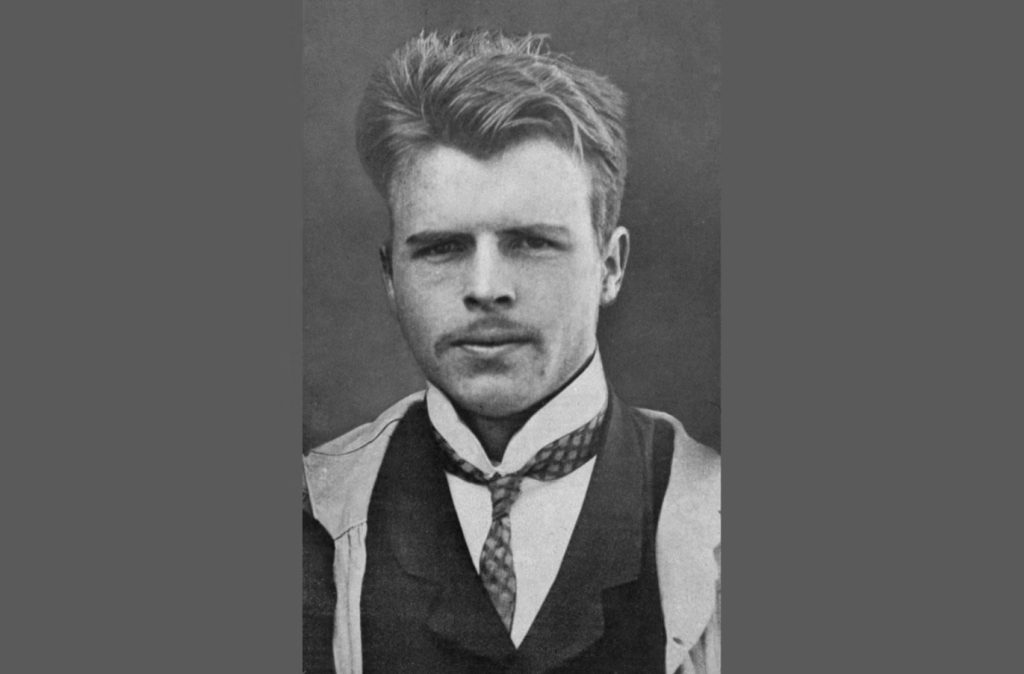

Few diagnostic tools in the history of psychology have captured the public imagination quite like the ten symmetrical inkblots created by Swiss psychiatrist Hermann Rorschach. To the popular mind, the Rorschach test is synonymous with psychological probing—a mysterious window into the hidden recesses of the subconscious mind. Yet, behind this world-famous psychological experiment was a brilliant, striking young doctor whose passion for visual art, childhood games, and perceptual science converged to create one of the most enduring innovations in clinical psychiatry.
The story of Hermann Rorschach is a remarkable fusion of artistic sensibility and medical rigor. Long before he began analyzing psychiatric patients’ responses in Swiss asylum wards, Rorschach was deeply enamored with drawing, painting, and visual perception. By examining his childhood fascination with inkblots, his dual talent as an artist and physician, his untimely death at the peak of his career, and the sudden global rise of his diagnostic test, we see a captivating portrait of a man who transformed a simple parlor game into a revolutionary mirror for the human soul.
“Klex”: The Childhood Roots of a Visual Pioneer
Born in Zurich in 1884, Hermann Rorschach grew up in an environment saturated with visual art. His father, Ulrich Rorschach, was a talented painter and art teacher who encouraged young Hermann to draw, sketch, and explore visual forms from an early age. During high school, Rorschach developed such an intense passion for making inkblots and sketching that his classmates gave him a permanent nickname: “Klex.” The nickname was a direct play on the German word *Klexographien*, a popular European children’s game that involved dropping ink onto a piece of paper and folding it in half to create symmetrical, accidental shapes.
This early obsession with *Klexographie* was far more than a passing childhood hobby. While his peers viewed inkblots as simple entertainment, young Rorschach was fascinated by how different people looking at the exact same ink shape saw entirely different images. When the time came to select a career, Rorschach found himself deeply torn between enrolling in art academy to become a professional painter or studying medicine at the university. Seeking guidance, he wrote a letter to the famous German biologist Ernst Haeckel, who advised him to pursue science. Rorschach took the advice, enrolling in medical school while quietly vowing to bring his artistic eye into the medical field.
From Art Student to Asylum Physician
Rorschach completed his medical studies under some of the most distinguished minds in early Swiss psychiatry, including Eugen Bleuler, who coined the term schizophrenia, and Carl Jung, who was exploring word association tests at the Burghölzli psychiatric hospital in Zurich. During his psychiatric residency, Rorschach observed that traditional psychiatric interviews often struggled to capture the inner emotional states of patients who were guarded, withdrawn, or severely psychotic. He realized that visual imagery could act as a bridge where verbal communication failed.
Drawing upon his dual background in psychiatry and fine art, Rorschach began experimenting with hand-painted inkblots as a clinical diagnostic tool. He was not interested in what the inkblots actually looked like in an objective sense; rather, he was fascinated by the process of perception itself. He recognized that when an individual is asked to interpret an ambiguous, non-representational shape, their brain automatically projects its own internal structure, hidden anxieties, subconscious drives, and perceptual habits onto the page to create meaning.
Form Interpretation: Crafting the Ten Iconic Inkblots
Beginning around 1911, Rorschach devoted years to meticulously testing hundreds of different inkblot designs on hundreds of psychiatric patients, asylum inmates, and healthy control subjects. He noticed that different diagnostic groups responded to the shapes in strikingly consistent ways. For instance, individuals suffering from mania tended to respond rapidly with overwhelming movement-based interpretations, while patients with deep depression offered few responses, focusing strictly on dark outlines and edge details. People with schizophrenia often saw wildly chaotic, fragmented forms that ignored the basic structure of the blot entirely.
Through exhaustive trial and error, Rorschach narrowed his vast collection down to ten definitive cards. Five were printed in black ink on white paper, two were black and red, and three were vibrant, multi-colored compositions. Rorschach carefully designed each blot to possess a delicate balance between structure and ambiguity. The cards were not entirely random splatters; Rorschach specifically calibrated them with specific proportions, textures, and shading to provoke emotional reactions, evoke movement, and challenge the viewer’s perceptual synthesis.
Publishing Psychodiagnostik and the Scientific Scoring System
In 1921, Rorschach published his masterwork, a slim monograph titled “Psychodiagnostik” (*Psychodiagnostics*), which presented his ten inkblot cards alongside a complex, objective scoring system. Rorschach emphasized that his test was not an imaginative test, but a test of perception and form interpretation. The crucial diagnostic data came not just from *what* the subject saw (such as a bat, a mask, or two dancing figures), but *how* they saw it—specifically whether they focused on the whole shape or minor details, whether they responded to color or shading, and whether they perceived motion in the static images.
Initially, the medical and scientific community met “Psychodiagnostik” with apathy and skepticism. Publishers hesitated to print the book because reproducing the ten inkblot cards with exact color precision and delicate shading was immensely costly. When a publisher finally agreed to print a limited run, the press run was small, sales were agonizingly slow, and several prominent European psychiatrists dismissed Rorschach’s perceptual methodology as an unscientific curiosity.
Tragic Early Death and the Posthumous Global Phenomenon
Tragically, Hermann Rorschach never lived to see his invention achieve global fame or revolutionary success. Just nine months after the publication of “Psychodiagnostik,” in April 1922, Rorschach developed severe abdominal pain. Ever dedicated to his clinical work, he delayed seeking medical treatment for several days. By the time he was admitted to the hospital, his appendix had ruptured, leading to severe, fatal peritonitis. Hermann Rorschach died on April 2, 1922, at the age of just thirty-seven, leaving behind his wife, two young children, and a groundbreaking diagnostic tool whose full potential was still largely unrecognized.
Following his sudden death, a small group of devoted colleagues and students kept Rorschach’s work alive, refining his scoring methodology and presenting it at international medical conferences. By the late 1930s, the Rorschach test crossed the Atlantic to the United States, where it exploded in popularity across psychiatric hospitals, university research centers, military screening facilities, and courtrooms. American psychologists standardized the scoring criteria, transforming “Klex’s” ten inkblots into the single most widely administered projective psychological test in the world.
Pop Culture, Brad Pitt, and the Iconic Aesthetic
As the Rorschach inkblot test became deeply ingrained in modern clinical psychology, the image of Hermann Rorschach himself eventually re-emerged into popular culture. Modern commentators, online biographers, and social media users frequently point out an uncanny, striking physical resemblance between the handsome young Swiss psychiatrist and the Hollywood actor Brad Pitt, sparking viral interest in Rorschach’s personal life and artistic background.
Furthermore, the symmetrical, dark aesthetic of the inkblots permeated modern art, literature, cinema, and comic books—most notably inspiring the famous antihero character Rorschach in Alan Moore’s graphic novel “Watchmen,” whose constantly shifting inkblot mask reflects the moral corruption of the world around him. What began as a Swiss schoolboy’s nickname and an asylum physician’s artistic experiment evolved into a timeless cultural archetype, cementing Hermann Rorschach’s legacy as a true master of visual perception.
Conclusion: The Artist Who Mapped the Unconscious
Hermann Rorschach’s enduring contribution to psychology grew directly from his refusal to separate art from science. By viewing inkblots through the combined lens of a trained painter and a rigorous asylum psychiatrist, he discovered that the way we see ambiguous forms reveals the deep, unwritten architecture of our minds. His ten cards were not mystical crystal balls, but sophisticated visual mirrors, reflecting the hidden landscape of human perception, emotion, and subconscious structure.
Though his life was cut tragically short at the age of thirty-seven, “Klex” left an indelible mark on modern medicine. He demonstrated that perception is never neutral, and that when we gaze into the unknown, we inevitably see ourselves. Rorschach’s life stands as a testament to the power of interdisciplinary thinking, proving that when artistic intuition is harnessed by medical discipline, it can illuminate the deepest mysteries of the human condition.
FAQ about Hermann Rorschach and the Inkblot Test
Why was Hermann Rorschach nicknamed “Klex” as a high school student?
Hermann Rorschach was nicknamed “Klex” by his high school classmates because of his intense obsession with drawing, painting, and playing *Klexographie*, a popular European children’s game that involved dropping ink onto paper and folding it in half to create symmetrical inkblots. The nickname directly references the German word for inkblot (*Klex*), foreshadowing his later work using inkblot shapes for psychiatric diagnosis.
Is the Rorschach test a test of imagination or perception?
Hermann Rorschach explicitly designed his inkblot test as a test of perception and form interpretation, not creative imagination. The clinical scoring system focuses not just on what a person sees in the blots, but on how they perceive them. Its diagnostic value comes from whether a person focuses on the whole blot or small details, whether color or shading influences them, and whether they perceive movement in the static ink shapes.
How many inkblot cards are in the official Rorschach test?
There are exactly ten official inkblot cards in the standard Rorschach test. Five of the cards are printed entirely in black and gray ink on white cardboard, two cards feature black and bright red ink, and three cards are multi-colored with pastel shades of blue, green, yellow, and orange. Rorschach carefully selected these ten shapes after testing hundreds of variations on psychiatric patients and healthy controls.
How did Hermann Rorschach die?
Hermann Rorschach died suddenly on April 2, 1922, at the age of thirty-seven due to peritonitis caused by a ruptured appendix. He had suffered from severe abdominal pain for several days but delayed seeking emergency medical attention due to his heavy workload at the Herisau psychiatric hospital. He died less than a year after publishing his masterwork, *Psychodiagnostik*, and never got to witness his test become a global phenomenon.
What is a projective test in clinical psychology?
A projective test is a psychological assessment tool in which a patient is presented with ambiguous, unstructured stimuli—such as inkblots, vague pictures, or incomplete sentences—and asked to describe what they see or feel. The fundamental theory behind projective testing is that because the stimulus has no single correct meaning, the patient will automatically project their own unconscious feelings, internal conflicts, personality traits, and coping mechanisms onto the ambiguous shape.
Recommended Books on Hermann Rorschach
- The Inkblots: Hermann Rorschach, His Iconic Test, and the Power of Seeing by Damion Searls
- Psychodiagnostics: A Diagnostic Test Based on Perception by Hermann Rorschach
- The Rorschach: A Comprehensive System by John E. Exner Jr.
- Hermann Rorschach’s Psychodiagnostics: Studies and Reflections by Philip Urso
- Measuring the Mind: Conceptual Issues in Contemporary Psychometrics by Mark Wilson