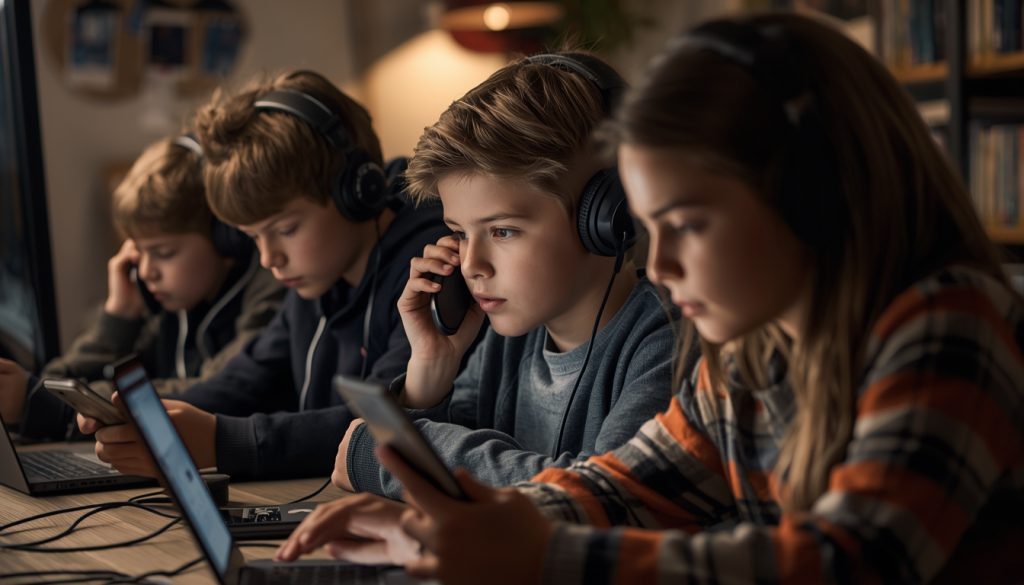

The modern playground has undergone a fundamental transformation. Where previous generations found social stimulation in physical proximity and spontaneous outdoor play, many children today find their primary social gratification through digital interfaces. This shift has led to an increasing observation among developmental psychologists: a growing preference for screen-based interaction over face-to-face peer engagement. This phenomenon, often termed digital social preference, is not merely a matter of laziness or a love for technology. Instead, it is rooted in a complex interplay of neurological rewards, the avoidance of social anxiety, and the controlled environment that digital platforms provide. To understand why a child might choose a tablet over a teammate, we must examine the psychological mechanisms that make screens feel safer and more rewarding than the unpredictable nature of human contact.
The Predictability of the Digital Interface
Human interaction is inherently messy, unpredictable, and emotionally taxing. When children interact in person, they must navigate a constant stream of non-verbal cues, tone shifts, and social expectations that require high-level cognitive processing. This is known as social load. For many children, especially those still developing their emotional intelligence, this load can feel overwhelming. In contrast, a digital interface offers a high degree of control and predictability. Whether it is a video game or a social media feed, the rules of engagement are clearly defined and the outcomes are often consistent.
In a digital environment, the child is often the primary agent of change. They can pause a game, mute a conversation, or exit an app if the social pressure becomes too great. This sense of agency is rarely present in real-world social settings, where peer dynamics can be volatile. For a child who feels socially vulnerable, the screen acts as a protective buffer. It allows them to engage with the world on their own terms, reducing the risk of unexpected social rejection or embarrassment. Over time, this preference for a controlled environment can lead to a feedback loop where the child feels less competent in real-world settings, further driving them back toward the safety of the screen.
Social Anxiety and the Safety of the Screen
Social avoidance is often a coping mechanism for anxiety. In a physical setting, the threat of negative peer evaluation is constant. Children are acutely aware of being watched, judged, or excluded. The screen provides a form of social distance that mitigates these fears. Behind a screen, a child can carefully curate their responses, use emojis to signal emotion without the risk of physical vulnerability, and hide behind an avatar. This creates a psychological safety net that makes digital interaction feel far less risky than standing in a room with other children.
Psychologists note that when children avoid social challenges, they miss out on the vital process of social habituation. In normal development, children face social discomfort, navigate it, and realize they can survive it. This builds resilience. However, when a screen is always available as an escape route, the child never has to face that initial discomfort. Consequently, their social muscles begin to atrophy. The digital world becomes a sanctuary not because it is inherently better, but because it requires less emotional bravery. This avoidance behavior can eventually lead to a heightened sensitivity to social stress, making real-world interactions feel increasingly daunting and undesirable.
The Gamification of Social Validation
One of the most powerful reasons children prefer screens is the way digital platforms quantify social success. In the real world, knowing if a peer likes you or if you are doing well in a social group is a matter of intuition and subtle cues. In the digital world, social validation is explicit. It comes in the form of likes, hearts, views, and digital rewards. This gamification of social interaction speaks directly to the brain’s reward system, providing a clear and immediate sense of belonging that the physical world rarely offers with such consistency.
For a child, these digital metrics provide a measurable sense of status. Winning a match in a multiplayer game or receiving a flurry of comments on a post provides a high-intensity hit of dopamine. Because these rewards are designed to be frequent and accessible, the physical world feels quiet and unrewarding by comparison. A conversation at the dinner table or a game of catch cannot compete with the rapid-fire validation cycles found in digital spaces. This leads to a shift in preferences, with the child viewing physical social time as a low-reward activity that takes them away from the high-reward digital environment.
The Role of Sensory Overload and Regulation
For many children, particularly those with neurodivergent traits or sensory processing sensitivities, the real world is loud, bright, and chaotic. A crowded school hallway or a noisy birthday party can lead to sensory overload, which triggers a stress response. Screens, while visually stimulating, provide a narrow, focused sensory input that the child can regulate. They can control the volume, the brightness, and the intensity of the experience.
In this context, choosing a screen over friends is a form of self-regulation. The digital world provides a structured sensory experience that helps the child filter out the overwhelming noise of the physical environment. When a child is absorbed in a screen, they enter a state of flow where the outside world recedes. While this provides temporary relief from sensory stress, it also prevents the child from learning how to navigate and integrate sensory information from their physical environment. The screen becomes a digital cocoon, protecting the child from the world but also isolating them from the very experiences they need to grow.
The Erosion of Spontaneous Play
Historically, social skills were forged in the fires of spontaneous, unstructured play. This type of play requires negotiation, compromise, and the collective creation of rules. It is the primary way children learn empathy and conflict resolution. However, the rise of structured extracurricular activities and the ubiquity of screens have significantly reduced the opportunities for this kind of play. When children do have free time, they often turn to screens because they have become the default mode of entertainment.
The loss of spontaneous play has created a generation of children who may feel uncertain about how to initiate or maintain a social encounter without a digital mediator. If a child does not know how to start a game or join a group, the screen offers an immediate solution to boredom and social awkwardness. Instead of doing the hard work of building a social structure from scratch, they can simply join a pre-made digital world. This convenience comes at a high price: the loss of the fundamental social skills that enable humans to connect, collaborate, and form deep, meaningful bonds.
Parental Influence and the Path Forward
It is important to acknowledge that the preference for screens is often reinforced by the environment. In an increasingly busy world, screens are frequently used as digital babysitters to keep children quiet and safe. While this provides short-term convenience for parents, it unintentionally signals to the child that the screen is the preferred method for managing time and emotions. To change this dynamic, there must be an intentional effort to re-prioritize physical social interaction and model healthy digital boundaries.
Encouraging social engagement requires more than just taking away the device. It involves creating environments where the child feels safe to fail socially. Parents and educators can help by facilitating low-pressure social opportunities, such as small playdates focused on a shared hobby or interest. It is also essential to have open conversations about why screens feel so good and why the real world can feel so hard. By validating the child’s feelings of social anxiety while gently encouraging them to step outside their digital comfort zone, we can help them rediscover the unique joy of human connection that no screen can ever truly replicate.
FAQ about the Psychology of Social Avoidance
Is it normal for my child to prefer playing video games over going to a friend’s house?
While it has become common in the digital age, a consistent preference for screens over friends often indicates that the child finds digital environments more rewarding or less stressful than social ones. It is important to look at the frequency and the reason behind the choice. If the child is avoiding friends because they feel anxious or because they find real-world interaction boring, it may be a sign that their social and reward systems have become heavily conditioned by technology. Encouraging a balance is key to ensuring they develop necessary interpersonal skills.
Does social avoidance through screens lead to long-term social anxiety?
Social avoidance can be a double-edged sword. While it provides immediate relief from anxiety, it prevents the child from experiencing social successes that build confidence. Over time, the lack of practice in real-world settings can make social situations feel even more threatening, which can exacerbate social anxiety in the long run. The brain needs regular social “exercise” to feel comfortable in groups. Without it, the child may struggle more as social demands increase in adolescence and adulthood.
How can I tell the difference between a healthy interest in technology and social avoidance?
A healthy interest usually involves the child using technology as one of many tools for entertainment and learning, and they are generally happy to put the device away for a social event or outdoor play. Social avoidance is more likely when the child becomes distressed, irritable, or extremely resistant when asked to engage with peers. If the screen is being used primarily to escape from social pressure, boredom, or difficult emotions, it has likely moved from an interest to a protective coping mechanism.
Can digital friendships replace the need for in-person interaction?
Digital friendships can provide a sense of community and support, especially for children with niche interests. However, they lack many of the elements essential for healthy development, such as reading body language, experiencing physical presence, and navigating shared physical spaces. In-person interaction requires a higher level of emotional intelligence and provides a different type of neurological nourishment. While digital connections are valuable, they should supplement rather than replace face-to-face relationships.
What are some simple ways to encourage a child to choose friends over screens?
Start by creating screen-free zones and times in the house where everyone, including adults, puts away their devices. Focus on “high-interest” social activities that match your child’s passions, such as a specialized club or a sports team, which makes the social aspect feel secondary to the fun activity. It is also helpful to make your home a welcoming place for friends to visit, providing unstructured space for them to play without digital distractions. Building social confidence in small, manageable steps is the most effective way to help a child move away from the screen.
Recommended Books
- The Art of Screen Time: How Your Family Can Balance Digital Media and Real Life by Anya Kamenetz
- Alone Together: Why We Expect More from Technology and Less from Each Other by Sherry Turkle
- Glow Kids: How Screen Addiction Is Hijacking Our Kids-and How to Break the Trance by Nicholas Kardaras
- The Self-Driven Child: The Science and Sense of Giving Your Kids More Control Over Their Lives by William Stixrud and Ned Johnson
- Social Intelligence: The New Science of Human Relationships by Daniel Goleman