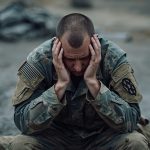
Leadership in a combat environment represents the most stressful application of psychological principles known to human science. Unlike corporate or athletic leadership, the wartime commander operates in an environment where the stakes are existential, information is perpetually fragmented, and the emotional weight of decision-making has permanent consequences. Under extreme pressure, a leader’s psychological architecture must balance the cold requirements of tactical logic with the intensely human needs of the soldiers they command. This article examines the cognitive and emotional frameworks required to maintain effective leadership when the traditional structures of safety and predictability have completely dissolved.
The psychology of wartime leadership is not merely about bravery; it is about managing cognitive load and preserving social cohesion under the threat of death. When the brain is subjected to the physiological screams of the fight-or-flight response, the ability to process complex data and make ethical choices is severely compromised. Understanding how successful leaders override these primal instincts provides vital insights into the resilience of the human spirit.
The Cognitive Architecture of Decisiveness
Under extreme pressure, the human brain undergoes a process known as cognitive narrowing. As stress hormones flood the system, the prefrontal cortex—the area responsible for executive function, long-term planning, and impulse control—begins to lose its dominance to the amygdala. For a leader, this transition can be catastrophic. Cognitive narrowing causes an individual to fixate on a single data point while ignoring the broader tactical environment. This is often referred to as tunnel vision, and in a leadership context, it leads to rigid, unimaginative decision-making.
Effective wartime leaders develop a psychological “override” through rigorous training and mental conditioning. They learn to recognize the physical signs of their own stress response and utilize deliberate techniques to regain cognitive control. By maintaining a regulated nervous system, the leader can achieve a state of situational awareness that allows them to process the “fog of war” without being paralyzed by it. This ability to remain analytically detached while physically endangered is the hallmark of advanced leadership psychology.
Managing the Fog of War and Information Overload
Wartime pressure is rarely characterized by a lack of information; rather, it is characterized by an overwhelming amount of contradictory or irrelevant data. A leader’s primary psychological task is to act as a filter. They must determine which pieces of information are critical for the immediate mission and which can be discarded. This requires a high degree of cognitive flexibility—the ability to shift strategy rapidly as new, verified information emerges.
The pressure to act quickly often conflicts with the need to act correctly. This tension creates a psychological phenomenon known as decisional paralysis, where the fear of making a wrong choice leads to making no choice at all. Successful leaders utilize a heuristic approach, relying on internalized patterns and mental models to make “good enough” decisions rapidly. They understand that in a high-pressure environment, a timely 80 percent solution is almost always superior to a delayed 100 percent solution.
The Emotional Reservoir: Empathy and Detachment
One of the most complex psychological challenges of wartime leadership is maintaining a dual emotional state. On one hand, a leader must possess a deep sense of empathy for their subordinates to maintain morale and trust. On the other hand, they must maintain enough professional detachment to send those same individuals into harm’s way. This internal conflict is a significant source of psychological strain and can lead to compassion fatigue if not managed correctly.
Empathy in leadership serves as the glue for unit cohesion. When soldiers believe their leader genuinely cares for their well-being, their willingness to endure hardship increases. However, if the leader becomes too emotionally enmeshed, their judgment may become clouded by the desire to avoid any risk to their personnel. The psychological balance required is a form of “detached concern,” in which the leader remains fully aware of the human cost of their orders while remaining committed to the mission’s necessity.
The Contagion of Calm
In psychology, emotional contagion refers to the phenomenon where the emotional state of one individual spreads to others in a group. In a high-pressure combat scenario, the leader is the primary source of this contagion. If a leader displays outward signs of panic, indecision, or terror, those emotions will ripple through the unit, leading to a breakdown in discipline and effectiveness. Conversely, a leader who projects an aura of calm and controlled confidence can settle the nervous systems of their subordinates.
This projection of calm is often an act of profound psychological labor. The leader may feel the same level of fear as their soldiers, but they consciously choose to suppress the outward manifestation of that fear. This is not a denial of reality, but a tactical use of emotional regulation. By acting as a stabilizing force, the leader provides the psychological safety necessary for the soldiers to focus on their specific tasks rather than their own survival instincts.
The Weight of Moral Agency and Responsibility
Leadership under pressure involves the constant exercise of moral agency in ambiguous situations. Every decision carries a moral weight, and the leader is the one who must carry the burden of the outcome. This responsibility can lead to significant psychological trauma, even if the decisions made were tactically sound. The weight of losing subordinates or causing collateral damage creates a unique form of stress that can persist long after the conflict has ended.
The psychological concept of “locus of control” is vital here. Leaders who have an internal locus of control—believing that their actions significantly influence outcomes—are often more effective in the moment but may be more susceptible to intense guilt if things go wrong. Developing a healthy psychological framework for processing responsibility involves recognizing the limits of one’s control while still maintaining accountability for one’s choices.
Resilience and Post-Traumatic Growth in Leaders
The intensity of wartime leadership can lead to two distinct psychological paths: burnout and trauma, or post-traumatic growth. Resilience is the factor that determines which path is taken. Resilience in leadership is built through a combination of social support, a clear sense of purpose, and the ability to find meaning in suffering. Leaders who view their role as a service to a higher cause or to their soldiers are often more resilient than those driven by personal ambition.
Post-traumatic growth occurs when a leader emerges from extreme pressure with a reorganized psychological perspective. They may develop a deeper appreciation for life, increased personal strength, and a more complex understanding of human nature. This growth is not the absence of trauma, but the integration of it. By processing the pressure of leadership effectively, an individual can develop a level of psychological maturity that is unattainable in lower-stress environments.
Conclusion: The Human Element in the Machine of War
Leadership under extreme wartime pressure remains a deeply human endeavor that technology cannot replace. It is the application of psychological strength to a chaotic and violent reality. By mastering their own cognitive responses, regulating their emotions, and accepting the heavy mantle of moral responsibility, wartime leaders create the conditions for collective survival and mission success. The study of this psychology reveals that the most powerful weapon on any battlefield is not a piece of hardware, but a disciplined and resilient human mind capable of leading others through the darkness of conflict.
FAQ
How does sleep deprivation specifically affect the psychology of a leader in combat?
Sleep deprivation is one of the most significant physiological stressors in wartime, and its psychological effects are profound. For a leader, the primary casualty of a lack of sleep is the ability to perform complex cognitive tasks and maintain emotional regulation. A sleep-deprived brain struggles to filter out irrelevant information, leading to poor judgment and increased irritability. More dangerously, it diminishes the leader’s ability to sense the emotional state of their unit, making them less effective at maintaining morale. Over time, chronic exhaustion can lead to a state of “micro-sleeps” where the brain momentarily shuts down, potentially causing catastrophic lapses in situational awareness during critical moments of decision-making.
Can a leader be too detached from the reality of the danger they are in?
While a degree of detachment is necessary for analytical decision-making, a total disconnection from the reality of danger can be a symptom of psychological dissociation or extreme hubris. A leader who is too detached may begin to view their subordinates as abstract units on a map rather than human beings, leading to unnecessary risk-taking and a breakdown in trust. Effective leadership requires a grounded awareness of the lethality of the environment. The goal is not to be fearless, which is often a sign of poor judgment, but to be courageous—meaning the leader acknowledges the fear and the danger but chooses to act logically and decisively despite those factors.
What psychological techniques can a leader use to regain focus during a sudden crisis?
One of the most effective immediate techniques is deliberate breathing, often called box breathing, which helps to manually slow the heart rate and signal to the brain that it is not in an immediate state of physiological collapse. This can break the cycle of panic and allow the prefrontal cortex to re-engage. Additionally, many leaders use “grounding” techniques, such as focusing on a specific physical object or a simple, repetitive task, to anchor themselves in the present moment. Mentally rehearsing various scenarios before they occur—a process called visualization—also helps, as it provides the brain with a “script” to follow when the actual crisis erupts, reducing the cognitive load required to formulate a plan from scratch.
How does the role of a leader change when the unit is facing a certain defeat or retreat?
In scenarios where the mission has failed or the unit is in retreat, the leader’s psychological role shifts from tactical success to the preservation of dignity and the prevention of total psychological collapse. During a retreat, the risk of panic and “every man for himself” mentality is at its highest. The leader must become a symbol of order and continuity. The psychological task is to maintain the identity of the group even when the physical goals of the group are no longer attainable. By maintaining discipline and a sense of shared purpose, the leader helps to mitigate the long-term psychological trauma that often follows defeat, ensuring that the soldiers’ sense of self-worth remains intact despite the tactical outcome.
Recommended Books
- The Mask of Command by John Keegan
- About Face by David H. Hackworth
- Once an Eagle by Anton Myrer
- The 7 Habits of Highly Effective People by Stephen Covey
- Leaders Eat Last by Simon Sinek
- Resilience by Eric Greitens