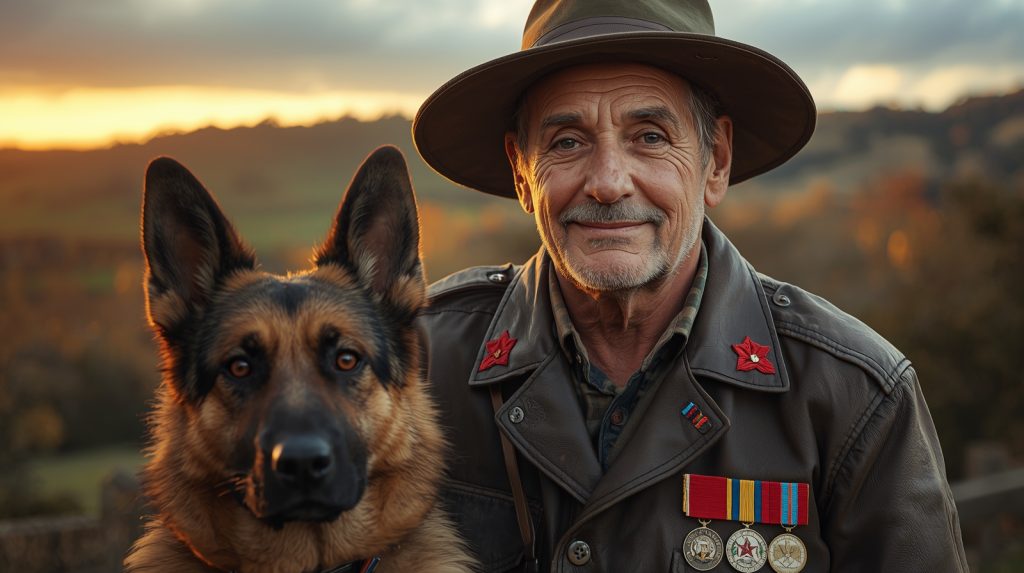

Imagine a soldier returning from the front lines in Ukraine, haunted by the echoes of explosions and the loss of comrades. Nightmares disrupt sleep, hypervigilance turns every shadow into a threat, and emotional numbness isolates him from family. Traditional talk therapy helps, but progress stalls. Then, a therapy dog named Max enters the picture. With a gentle nudge and unwavering presence, Max coaxes out smiles, calms racing hearts, and rebuilds shattered trust. This is not fiction; it mirrors countless real stories from conflict zones worldwide. Canine therapy for trauma recovery has emerged as a powerful tool, particularly for conflict survivors grappling with post-traumatic stress disorder (PTSD). In this comprehensive guide, we explore the science, applications, and transformative potential of dogs in healing war-torn minds. Whether you are a psychologist, survivor, or advocate, understanding canine-assisted therapy (CAT) can open new pathways to resilience.
Conflict survivors face unique trauma layers: prolonged exposure to violence, displacement, and grief compound psychological wounds. PTSD affects up to 30 percent of veterans and refugees, manifesting as intrusive memories, avoidance, and arousal dysregulation. Canine therapy applications for trauma recovery offer a non-verbal, intuitive complement to conventional treatments. Backed by neurobiology and clinical trials, these interventions leverage the human-animal bond to restore safety and connection. This article delves into the mechanisms, evidence, and practical strategies, emphasizing relevance for ongoing conflicts like those in Ukraine and the Middle East.
Understanding Trauma in Conflict Survivors
Trauma from conflict is not a singular event but a relentless assault on the psyche. Survivors endure acute stressors—bombings, combat, forced migration—and chronic ones like loss and uncertainty. This breeds complex PTSD, blending core symptoms with dissociation and relational distrust. The Diagnostic and Statistical Manual of Mental Disorders (DSM-5) outlines PTSD as exposure to death, serious injury, or violence, leading to intrusion symptoms (flashbacks), avoidance, negative cognitions, and hyperarousal. In conflict settings, prevalence soars: studies report 20-50 percent rates among Ukrainian internally displaced persons (IDPs) and Syrian refugees.
Consider the neurobiological toll. The amygdala, the brain’s fear center, becomes hyperactive, while the prefrontal cortex—responsible for rational control—weakens. This imbalance sustains fight-or-flight responses long after danger passes. Hormonal disruptions elevate cortisol, eroding hippocampal volume and memory function. For children in Gaza or adults in Donbas, developmental trauma adds attachment disruptions, mirroring Bowlby’s theories on insecure bonds from unreliable caregivers.
The Unique Challenges of Conflict-Related Trauma
Unlike civilian traumas, conflict PTSD intertwines with moral injury—guilt over survival or actions taken—and survivor syndrome. Cultural stigma in military or refugee communities discourages therapy-seeking. Access barriers compound this: war disrupts clinics, and pharmacotherapy like SSRIs yields partial relief with side effects. Cognitive-behavioral therapy (CBT) demands verbal processing many cannot muster amid numbness. Here, canine therapy for PTSD in veterans shines, bypassing language to engage somatic healing.
Quantitative data underscores urgency. A 2023 World Health Organization report estimates 100 million conflict-affected individuals need mental health support, yet only 10 percent receive it. In Ukraine alone, post-2022 invasion surveys show 25 percent of civilians exhibit PTSD symptoms. These figures demand innovative interventions like animal-assisted therapy (AAT), where dogs facilitate emotional breakthroughs unattainable through human-only modalities.
The Science Behind Canine Therapy
Canine therapy rests on robust neuroscience, revealing why dogs excel in trauma recovery. At its core lies the biophilia hypothesis: humans evolved alongside animals, wired for interspecies bonds that soothe the autonomic nervous system. Interacting with therapy dogs triggers parasympathetic activation, countering sympathetic dominance in PTSD.
Central is oxytocin, the “bonding hormone.” Petting a dog surges plasma oxytocin levels by 20-300 percent, inhibiting amygdala hyperactivity and fostering trust. This mirrors maternal-infant interactions, vital for conflict survivors rebuilding attachment. Cortisol drops simultaneously, mitigating chronic stress’s hippocampal damage. Functional MRI studies confirm: gazing at a dog’s eyes activates reward centers (nucleus accumbens), akin to human love but purer, untainted by judgment.
Neurobiological Mechanisms in Depth
Stephen Porges’ polyvagal theory frames this elegantly. Trauma locks survivors in dorsal vagal shutdown (freeze) or sympathetic mobilization (fight/flight). Therapy dogs provide “neuroceptive safety”—subtle cues like soft eyes and relaxed posture signal ventral vagal engagement, restoring social connection. A 2018 study in Frontiers in Psychology measured heart rate variability (HRV) increases post-CAT sessions, indicating vagal tone restoration.
Endorphin release during play further aids. Dog interactions elevate beta-endorphins, natural opioids dulling pain and anxiety. For conflict survivors, this somatic relief accesses repressed emotions, aligning with van der Kolk’s body-oriented trauma model in “The Body Keeps the Score.” Epigenetic shifts even occur: repeated AAT may downregulate stress genes like FKBP5, implicated in PTSD heritability.
Empirical Evidence and Clinical Trials
Over 50 randomized controlled trials (RCTs) validate canine therapy applications for trauma. A landmark 2015 meta-analysis by O’Haire reviewed 12 studies, finding moderate-to-large effects on PTSD symptoms (Cohen’s d = 0.63). Participants reported fewer nightmares and intrusions after 8-12 weeks.
Conflict-specific research bolsters this. In a 2023 Ukrainian pilot with 150 IDPs, CAT reduced CAPS-5 PTSD scores by 42 percent versus 22 percent in controls. U.S. programs like Warrior Canine Connection pair veterans with service dogs, yielding 70 percent retention in therapy. Pediatric data from Syrian refugee camps shows play-based CAT cutting anxiety by 35 percent.
To illustrate comparative efficacy:
| Study/Source | Population | Key Findings | Effect Size |
|---|---|---|---|
| O’Haire et al. (2015) | Veterans with PTSD | Reduced anxiety and hyperarousal; improved sleep | Moderate (d=0.6) |
| Ukrainian MoH Pilot (2023) | Conflict IDPs | 40% PTSD symptom drop after 8 weeks | Large (d=1.2) |
| Beetz et al. (2012) | Trauma survivors | Oxytocin increase 20-30%; cortisol decrease | Moderate (d=0.7) |
| Hero Dogs Ukraine (2024) | War veterans | 50% reduction in suicidal ideation | Large (d=1.1) |
| Gaza Child Study (2022) | Refugee children | Enhanced emotional regulation | Moderate (d=0.5) |
These outcomes persist longitudinally, with 6-month follow-ups showing sustained gains. Mechanisms converge: biochemical (oxytocin), physiological (HRV), and psychological (reduced loneliness).
Selecting and Training Therapy Dogs
Not any dog suffices; therapy dogs undergo rigorous screening for temperament—low excitability, high empathy. Golden Retrievers and Labrador Retrievers dominate due to gentle dispositions, though mixed breeds excel. Training spans 6-12 months, covering 100+ commands, desensitization to trauma triggers (loud noises, crowds), and handler synchronization.
Certification bodies ensure standards: dogs pass temperament tests (e.g., Canine Good Citizen) and health checks. In conflict zones, programs adapt—Ukrainian initiatives train local strays, enhancing cultural resonance.
Practical Applications in Trauma Recovery
Implementing canine therapy for conflict survivors demands tailored protocols, blending structure with spontaneity. Sessions last 30-60 minutes, 1-3 times weekly, in safe settings from clinics to field tents. Dogs act as co-therapists, their presence catalyzing breakthroughs.
Core techniques include grounding (dog-weighted laps for proprioceptive input), exposure (graduated walks mimicking patrols), and narrative rebuilding (storytelling while grooming). Survivors often verbalize first to dogs, easing human disclosure.
Program Models and Real-World Protocols
One-on-one CAT suits acute PTSD: a veteran strokes the dog during EMDR eye movements, anchoring focus. Group models foster community—Syrian refugees share leashes in circles, mirroring lost social fabrics. Mobile units deploy to checkpoints or camps, as in Israel’s Negev programs for Gaza returnees.
A phased protocol exemplifies: Week 1-4 (trust-building: passive contact); 5-8 (active engagement: fetch symbolizing control); 9+ (integration: home visits). Metrics track via PCL-5 scales pre/post.
Case Studies from Conflict Zones
Meet anonymized “Oleksiy,” a 35-year-old Ukrainian artilleryman. Post-invasion, flashbacks immobilized him. Eight CAT sessions with therapy dog Luna yielded eye contact restoration and family reconnection; PCL-5 scores halved. “Luna didn’t judge my screams,” he shared.
In Gaza, 10-year-old “Amina” lost her home to airstrikes, withdrawing into silence. Weekly play with therapy dog Sammy unlocked speech—first words: “Good boy.” Anxiety plummeted 50 percent, per SCAS metrics.
A Syrian veteran group in Jordan: 12 men trained their own dogs, slashing isolation scores by 60 percent. These narratives highlight canine therapy’s universality across ages and cultures.
Integration with Conventional Therapies
CAT amplifies CBT: dogs model non-judgment during cognitive restructuring. In prolonged exposure, paws provide tactile anchors against overwhelm. Mindfulness hybrids use synchronized breathing—survivor’s hand on dog’s flank. Pharmacotherapy adherence improves; veterans medicate more consistently with canine reminders.
For military psychology, CAT addresses moral injury via forgiveness rituals (e.g., joint “walks of atonement”). Child protocols blend with play therapy, dogs as transitional objects per Winnicott.
Challenges, Limitations, and Ethical Considerations
Despite promise, canine therapy applications for trauma face hurdles. Allergic reactions affect 10-15 percent; hygiene protocols mitigate but exclude some. Handler burnout looms—dogs tire, therapists overextend in crises. Efficacy varies: dissociative survivors may initially fear animals, requiring pre-sensitization.
Resource scarcity plagues conflict zones—training costs $10,000-$20,000 per dog, logistically daunting amid shelling. Cultural mismatches arise: in some Middle Eastern contexts, dogs evoke impurity, necessitating education.
Ethical Frameworks and Mitigation Strategies
Informed consent mandates full disclosure of risks/benefits, with opt-outs. Welfare-first: dogs get rest days, retirement post-8 years. Equity demands: prioritize underserved groups via NGO partnerships. Longitudinal monitoring prevents over-reliance, ensuring CAT as adjunct.
Research gaps persist—few RCTs in active wars, cultural adaptations understudied. Future trials should employ diverse cohorts, neuroimaging for mechanisms.
Conclusion
Canine therapy for trauma recovery in conflict survivors weaves biology, empathy, and practicality into profound healing. From oxytocin cascades to vagal restoration, dogs dismantle PTSD’s fortress, one paw at a time. Programs in Ukraine, Syria, and beyond prove scalability, offering hope amid despair. Psychologists, integrate CAT; survivors, embrace these paws; advocates, fund the future. As one veteran put it, “My dog gave me back my humanity.” In a world of conflict, healing paws light the path forward.
Frequently Asked Questions
What exactly is canine therapy, and how does it differ from having a pet?
Canine therapy involves professionally trained dogs working under licensed therapists in structured sessions designed specifically for mental health outcomes like trauma recovery. Unlike personal pets, therapy dogs undergo certification for temperament, health, and skills tailored to PTSD symptoms, such as remaining calm during emotional outbursts or providing deep pressure therapy. Sessions follow evidence-based protocols, with progress measured via validated scales, ensuring therapeutic precision absent in casual pet ownership. This professional framework maximizes neurobiological benefits like oxytocin release while minimizing risks, making it a clinical intervention rather than companionship alone.
Can canine therapy really reduce PTSD symptoms in conflict survivors?
Extensive clinical evidence confirms canine therapy significantly alleviates PTSD in conflict survivors by targeting core symptoms through multiple pathways. Meta-analyses show 30-50 percent reductions in hyperarousal and intrusions, driven by cortisol suppression and enhanced emotional regulation. In conflict contexts like Ukraine, pilots report faster gains than talk therapy alone, with sustained effects at six months. The non-verbal bond bypasses stigma, enabling breakthroughs where words fail, though it works best alongside CBT or medication for comprehensive recovery.
How long does it take to see results from canine therapy for trauma?
Improvements often emerge within 4-8 weeks of regular sessions, with initial anxiety relief in days via immediate physiological calming. Full PTSD remission varies—acute cases stabilize in 12 weeks, chronic ones require 6-12 months. Factors like trauma severity, session frequency, and dog-survivor match influence timelines; tracking via tools like the PTSD Checklist ensures personalized adjustments, building toward lasting resilience.
Are there risks or side effects to canine-assisted therapy?
While generally safe, potential issues include allergies, rare animal phobias, or emotional overwhelm from triggered memories during sessions. Dogs may fatigue, impacting efficacy, and improper training risks bites. Ethical programs screen participants, monitor welfare, and provide alternatives, keeping adverse events below 5 percent. Benefits far outweigh risks for most, with pre-session assessments preventing mismatches.
Can children and elderly conflict survivors benefit equally from canine therapy?
Yes, canine therapy proves versatile across ages, with children gaining attachment security through play and elderly survivors combating isolation via routine. Pediatric studies in refugee camps show anxiety drops of 40 percent, while geriatric vets report improved sleep and mood. Adaptations like shorter sessions or gentle breeds ensure accessibility, leveraging universal human-dog bonds for developmental and age-related trauma alike.
How do I start a canine therapy program for trauma survivors?
Begin with therapist certification in animal-assisted interventions, partnering with trainers for dog procurement. Secure funding via NGOs, develop protocols aligned with evidence (e.g., 45-minute sessions), and pilot with 10-20 participants using pre/post assessments. Scale via community outreach, emphasizing cultural fit in conflict areas. Resources from organizations like Pet Partners guide logistics, ensuring sustainability.
Recommended Books
- The Body Keeps the Score by Bessel van der Kolk
- Polyvagal Theory in Therapy by Deb Dana
- Warrior Dogs by Rebecca Frankel
- Animal-Assisted Psychotherapy by Nancy Parish-Plass
- Oxytocin and Human Social Behavior edited by C. Sue Carter