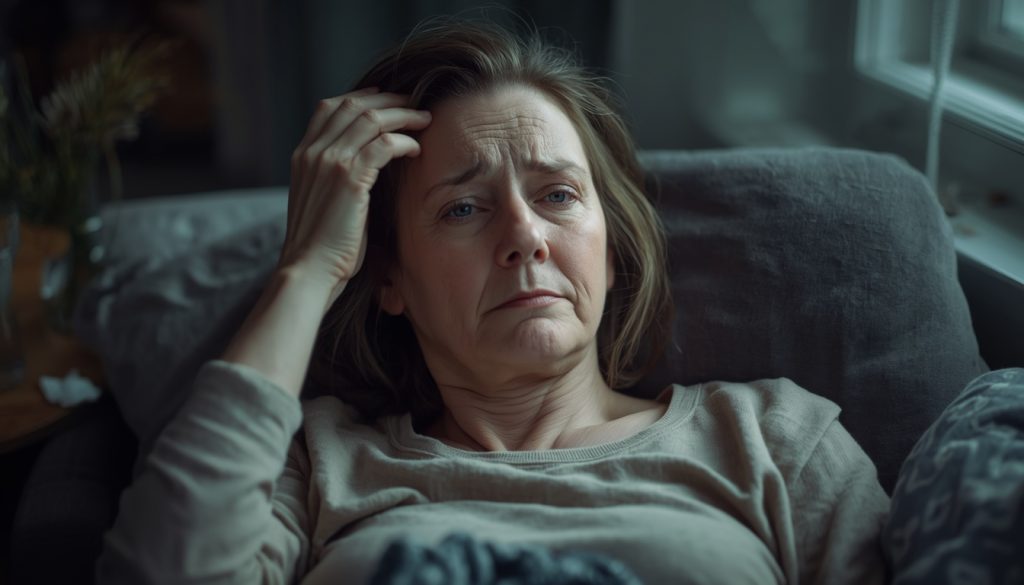

A person notices a small lump on the side of the neck while washing their face. It was not there last week, or perhaps it was and went unnoticed. A quick search on a phone seems a sensible response. The first page of results lists benign explanations, such as a swollen lymph node after a cold, but the eye is drawn to the rarer and graver possibilities further down. An hour later the person is reading forum threads written by strangers with serious diagnoses, comparing their symptoms with each description, and pressing a finger against the neck every few minutes to check whether the lump has changed. By evening, the lump has become the center of the day, and sleep that night is poor. The next morning the person searches again, in the hope of finding a more reassuring answer, and finds a different alarming one.
Almost everyone has done something like this. Concern about health is a normal and useful human trait, and the internet has made information about symptoms available to anyone with a phone. For most people, a search is brief, the worry passes, and life goes on. For a significant minority, however, the search is not a solution but a fuel. Each new piece of information produces new doubts, each moment of reassurance wears off within hours, and the preoccupation grows until it dominates thoughts, relationships, and daily routines. This pattern is known as health anxiety, and when it is severe and persistent, it is classified in modern diagnostic manuals as illness anxiety disorder or somatic symptom disorder. In everyday language, it has often been called hypochondria, a term that clinicians now generally avoid because it carries a sense of ridicule and because it suggests that the suffering is imaginary. The distress of health anxiety is entirely real, even when the feared illness is not.
The rise of search engines, symptom checkers, and social media has given this old problem a new dimension. Researchers have coined the term cyberchondria to describe the escalation of health worry that follows repeated online searching about symptoms. Studies suggest that a large share of adults in many countries use the internet to look up health information, and that for people who are prone to anxiety, the effect of doing so is frequently to increase distress rather than relieve it. The reason lies not in the quality of the websites alone but in the way that anxious minds process uncertain information and in the nature of the behaviors that keep the worry going.
This article offers a detailed, evidence-based account of health anxiety and of the part that online searching plays in sustaining it. It explains what health anxiety is, how it differs from ordinary concern and from related conditions, and what happens in the mind and body when a person becomes preoccupied with illness. It describes the cognitive and behavioral model that explains why reassurance does not work, why searching makes things worse, and how a cycle of checking, avoidance, and doubt takes hold. It examines the causes, the costs, and the treatments with the strongest scientific support, above all cognitive behavioral therapy, and it offers practical guidance for those who want to change their own relationship to symptoms and to search engines. The central message is that health anxiety is a problem of intolerance of uncertainty about the body, and that it is maintained far more by what a person does in response to worry than by any actual disease.
What Health Anxiety Is
Health anxiety is a persistent fear or conviction of having, or developing, a serious illness, despite medical evidence to the contrary or in response to symptoms that are minor or normal. It exists on a continuum. At one end is the ordinary and adaptive concern that leads a person to see a doctor about a worrying change, to follow screening recommendations, and to take care of the body. At the other end is a state in which worry about illness is excessive, hard to control, resistant to reassurance, and disruptive to life. Most people fall somewhere between the two, and many experience periods of heightened health worry during times of stress, after a diagnosis in a family member, or during a pandemic.
Normal Concern and Excessive Worry
It helps to consider the difference between helpful and unhelpful concern. A person who notices a mole that has changed shape and makes an appointment is acting sensibly, and once the doctor has examined it and offered a view, the concern ordinarily subsides. A person with health anxiety may attend the same appointment, hear the same reassuring conclusion, and still feel unconvinced. Within days, the doubt returns: perhaps the doctor missed something, perhaps the examination was too quick, perhaps the mole will change again. The concern does not respond to evidence in the usual way, and the person feels driven to seek further checks, tests, or opinions.
The hallmark of the problem is not the level of attention to health but the failure of reassurance to resolve the worry. Another feature is the way the worry spreads. A person with health anxiety often moves from one feared illness to another, so that the concern about a headache gives way to a concern about a heart palpitation and then to a concern about a skin mark. The specific content changes, but the underlying pattern of doubt and fear remains.
The Diagnostic Categories
In the fifth edition of the Diagnostic and Statistical Manual of Mental Disorders, the older category of hypochondriasis was replaced by two diagnoses. Illness anxiety disorder is diagnosed when a person is preoccupied with having or acquiring a serious illness, has few or no somatic symptoms, and, if a medical condition is present or likely, the preoccupation is clearly excessive. There is a high level of anxiety about health, and the person either performs excessive health-related behaviors, such as repeatedly checking the body for signs of illness, or shows maladaptive avoidance, such as avoiding doctors and hospitals. The preoccupation must have been present for at least six months, although the specific illness feared may change over that period. Illness anxiety disorder is further divided into a care-seeking type, in which the person frequently uses medical services, and a care-avoidant type, in which the person rarely does.
Somatic symptom disorder, in contrast, involves one or more physical symptoms that are distressing or disruptive, accompanied by excessive thoughts, feelings, or behaviors related to them, such as disproportionate and persistent worry about their seriousness, a high level of anxiety about them, or excessive time and energy devoted to them. The central difference is that in illness anxiety disorder the symptoms are absent or mild and the focus is on the feared disease, whereas in somatic symptom disorder the symptoms are prominent and the focus is on the symptoms and the person’s reaction to them. In practice, the two overlap, and many clinicians and researchers use the broader term health anxiety to cover the territory.
Health Anxiety and the Word Hypochondria
The word hypochondria comes from the ancient Greek term for the region below the ribs, which was once thought to be the seat of melancholy. In later centuries it came to describe people who were thought to imagine illness, and it acquired a dismissive tone that persists in everyday speech. People with health anxiety often say that the label is hurtful, because it implies that they are exaggerating or wasting the time of others. The research literature shows that the symptoms are very real in the sense that the person experiences genuine bodily sensations, genuine fear, and genuine distress. What is distorted is the interpretation of the sensations, not their existence. Using the term health anxiety acknowledges this and tends to be more helpful in promoting understanding and treatment.
How Common It Is
Health anxiety is more common than most people assume. Surveys of the general population suggest that around one to five percent of people meet the criteria for a diagnosable level of health anxiety at some point, and that a considerably larger share, perhaps one in five, report worries about health that are distressing without reaching the threshold for a diagnosis. In general medical settings, the figures are higher: studies of patients attending primary care and specialist clinics have found that between four and ten percent have significant health anxiety, and the proportion is higher in clinics for conditions such as heart symptoms, abdominal pain, and headaches. Men and women appear to be affected about equally, and the condition can begin at any age, although it often starts in early adulthood and may be triggered by illness or death in the family, by a personal health scare, or by periods of stress.
Severity and Course
The course of health anxiety varies. Some people experience short episodes linked to a particular stressor, with full recovery. Others have a long-lasting pattern that waxes and wanes, sometimes for decades. Without treatment, the condition tends to persist, although many people experience improvements in some periods. The encouraging fact is that well-studied psychological treatments produce lasting improvement in most people who receive them, and the sooner a person seeks help, the less time the pattern has to become entrenched.
Cyberchondria: The Internet and the Anxious Mind
The term cyberchondria was introduced in the early 2000s to describe the unfounded escalation of concerns about common symptoms based on review of search results and literature on the internet. It is not a formal diagnosis, but it has become a useful concept in research, and a number of questionnaires have been developed to measure it. The core observation is that, for people who are already anxious about health, online searching often acts as a cycle in which the search, intended to reduce worry, produces more of it.
Why People Search
The motives for online searching are easy to understand. The internet offers immediate answers, privacy, and a sense of control. It removes the barriers of cost, waiting time, and embarrassment involved in seeing a doctor. For a person who feels anxious about a symptom, the search promises relief: if the answer is benign, the worry will go away. For people with a high need for certainty, the temptation to search is particularly strong, because it appears to offer a way to resolve the uncertainty immediately. The activity is also rewarded in the short term, since a reassuring result brings a moment of calm, which teaches the brain to repeat the behavior.
Why Searching Backfires
There are several reasons why the effect of searching so often turns out to be the opposite of what was intended. The first is that search results are not ranked by likelihood. A symptom such as a headache is, in the great majority of cases, the result of tension, dehydration, poor sleep, or a minor viral illness. But the number of possible causes, including very rare and serious ones, is large, and a list of possibilities does not tell the reader how probable each one is. The human mind tends to focus on the most frightening item, a tendency related to the negativity bias and to the availability heuristic, in which vivid examples seem more likely than they are. Reading that a symptom can be caused by a serious illness is not the same as learning that it probably is, but an anxious reader is unlikely to make the distinction.
The second reason is that online content is often written to attract attention, and alarming headlines and personal accounts of rare conditions are widely shared. Forums and social media are filled with stories of people whose minor symptoms turned out to be serious, which creates an impression that such outcomes are common. This is an example of a sampling problem: people with benign outcomes rarely write posts about them. The third is that searching is open-ended. There is no natural point at which it ends, since there is always another page, another opinion, or another symptom to check. For a person who needs certainty, the search can continue for hours.
The fourth reason is that searching strengthens the belief that the way to handle uncertainty is to resolve it by gathering information. Each time the person searches and feels temporary relief, the brain learns that searching is necessary to cope with doubt, which increases the urge to search the next time. The behavior thus becomes a compulsion, with features similar to the reassurance seeking seen in obsessive-compulsive disorder. Finally, searching increases attention to the body. A person who reads about a symptom starts to scan for it, and the act of scanning produces new sensations that seem to confirm the worry.
The Evidence on Online Searching and Anxiety
Research supports these concerns. In a series of studies, the psychologist Vladan Starcevic and others have shown that cyberchondria is associated with higher levels of health anxiety, and that the relationship runs in both directions: people who are anxious search more, and searching increases anxiety. An experimental study by Ryen White and Eric Horvitz at Microsoft, which analyzed large-scale search logs, found that people who began with a common symptom, such as a headache, often escalated to searches about serious conditions such as brain tumors, and that the escalation was associated with increased anxiety and a greater tendency to seek medical care. The authors noted that the rankings and language of search results, and the habit of anxious users to click on frightening pages, contributed to the effect.
Other research has found that the amount of time spent searching and the number of different sources consulted predict the severity of distress, not the other way around. Not all online health information is harmful: reliable sources can educate and help people to make good decisions, and many people use the internet in a balanced way. The risk is greatest for those with a tendency to intolerance of uncertainty and to catastrophic thinking, and for whom the search has become a repetitive, compulsive behavior.
Symptom Checkers, Forums, and Artificial Intelligence
Automated symptom checkers and chatbots add a further dimension. They may provide a structured list of possibilities, with varying levels of accuracy, and some err on the side of caution by recommending medical attention in a large proportion of cases. For an anxious person, a long list of differential diagnoses can feel as threatening as an unfiltered search. Online communities for particular illnesses can offer valuable support to people who are actually ill, but for those with health anxiety, they can provide a stream of stories and symptoms that are easy to identify with. Conversational artificial intelligence tools can give useful general explanations, but a person with health anxiety who asks them the same question repeatedly, in search of certainty, is engaging in the same reassurance-seeking cycle, however polished the answers may be. The underlying principle is the same: any source of reassurance can become part of the problem when it is used compulsively.
Inside the Mind of Health Anxiety
The most influential explanation of health anxiety is the cognitive-behavioral model developed by the British psychologists Paul Salkovskis and Hilary Warwick in the 1980s and refined by others since. The model has guided the development of effective treatments and explains many puzzling features of the condition, including why reassurance fails and why searching escalates worry.
The Core Idea: Misinterpretation of Bodily Sensations
According to the model, health anxiety begins with the way a person interprets bodily sensations and changes. Everyone has bodily sensations all the time: heartbeats, muscle twitches, stomach noises, aches, and skin marks. These are usually ignored, but when attention is drawn to them, they become noticeable. A person with health anxiety interprets such sensations as signs of serious illness. A flutter in the chest is a heart condition, a tingling in the hand is multiple sclerosis, a persistent headache is a tumor. This interpretation is not simply irrational. It arises from the person’s beliefs about illness, which may include the belief that serious disease is common, that symptoms are reliable signs of it, and that failing to detect it early would be catastrophic.
The misinterpretation produces anxiety, and anxiety itself produces bodily symptoms: increased heart rate, muscle tension, nausea, dizziness, sweating, and sleep disturbance. The person notices these new sensations and takes them as further evidence of illness. In this way, a loop develops in which fear produces symptoms, symptoms produce fear, and attention to the body keeps the process going.
Selective Attention to the Body
Attention plays a central role. When a person focuses on a part of the body, sensations from that area become more noticeable, a phenomenon that can be demonstrated by asking anyone to concentrate on their left foot for a minute. People with health anxiety spend long periods monitoring their bodies for signs of illness, a behavior called body checking or symptom scanning. This increases the number of sensations noticed and makes harmless variations seem unusual. Research has found that people with high health anxiety show a bias toward health-threatening information: they notice and remember illness-related words and images more readily, and they find it harder to disengage from them.
Intolerance of Uncertainty and the Need for Certainty
One of the most consistent findings is that health anxiety is linked to intolerance of uncertainty, the tendency to find ambiguity and the unknown difficult to bear. Medicine is inherently uncertain. Doctors cannot promise that no illness will ever develop, and tests have limits and error rates. For a person with a low tolerance for uncertainty, any remaining possibility of illness, however small, is intolerable, and the only way to feel safe appears to be to reach complete certainty. This demand can never be met. Even a clear test result leaves open the question of whether the test was accurate, whether the disease might develop later, or whether a different disease might be present. The person therefore goes on seeking, and each attempt to find certainty leaves a residue of doubt, which restarts the search.
Beliefs About Health and Illness
Underlying the interpretation of symptoms are deeper beliefs, which are often formed early in life. They may include the belief that the body is fragile and vulnerable, that illness is unpredictable and catastrophic, that being healthy means having no symptoms at all, that it is the individual’s duty to guard against disease, that doctors cannot be trusted to detect everything, or that worrying protects against illness. Some people hold the superstitious belief that thinking about illness may make it more likely, or that not worrying is a form of carelessness. Beliefs of this kind can be activated by a critical incident, such as a death or illness in the family, and then guide the interpretation of everyday sensations.
The Role of Safety Behaviors
Like other anxiety conditions, health anxiety is maintained by behaviors intended to reduce fear or prevent disaster. These safety behaviors take several forms, and they are central to the cycle.
Checking is among the most common. It includes examining the body for lumps, marks, or changes, taking pulse and blood pressure readings, monitoring temperature, checking the color of urine or stools, pressing on the abdomen, looking at the tongue or throat, and using devices such as smart watches and home testing kits. Repeated checking has the effect of drawing attention to the body, irritating tissues, and causing real changes such as soreness or bruising that appear to confirm the problem. Reassurance seeking includes asking family members, friends, or doctors whether a symptom is serious, requesting repeated tests or referrals, and searching the internet. Avoidance involves staying away from things that evoke thoughts of illness, such as hospital visits, television programs about disease, news about health, or conversations about sickness. A person may also avoid physical activity for fear of triggering symptoms, or avoid medical appointments for fear of receiving bad news. Other safety behaviors include mental reviewing, researching, and attempts to prevent illness by rigid health routines, special diets, or the carrying of medications.
Why Reassurance Fails
The failure of reassurance is one of the most distinctive features of health anxiety, and it often frustrates both the person and those around them. A doctor examines the person and says that nothing is wrong. The person feels better for a short time, but the doubt returns within hours or days. Several mechanisms explain this.
First, reassurance addresses the particular worry of the moment but does not change the underlying belief that illness could be present and that vigilance is necessary. A new symptom will therefore trigger the same cycle. Second, reassurance is only as good as the person’s trust in it, and an anxious person may think that the doctor did not examine thoroughly enough, did not order the right test, or was trying to avoid causing alarm. Third, reassurance may strengthen the cycle by reinforcing the idea that uncertainty must be resolved by others. Each time the person obtains reassurance, the brain learns that anxiety is relieved by seeking it, and the urge to ask again grows, in the same way as in obsessive-compulsive disorder. Fourth, the relief from reassurance is short-lived because the underlying intolerance of uncertainty is still present. This pattern explains why many people with health anxiety make repeated visits to doctors, accumulate many tests, and still feel unconvinced.
The Vicious Cycle in Summary
The model can be summarized as a series of steps that repeat.
- A trigger occurs: a bodily sensation, a skin mark, a news story about a disease, a friend’s diagnosis, or a stray thought.
- The person interprets the trigger as a possible sign of serious illness.
- Anxiety rises, producing physical symptoms and directing attention to the body.
- The person performs safety behaviors: checking the body, searching online, asking for reassurance, or avoiding.
- Short-term relief follows, or new worries arise from what was found.
- The underlying belief that illness is likely and that vigilance is necessary is strengthened, so the next trigger produces a stronger response.
This cycle explains how health anxiety can persist for years without any actual disease, and it identifies the points at which treatment can intervene.
A Composite Example
The following example is a composite and does not describe a real person. A woman in her late thirties, whose father died of a heart attack when she was in her twenties, experiences a brief episode of chest tightness while climbing the stairs at work. She thinks, “This is how it started for my father.” Her heart begins to race, which she takes as a sign that something is seriously wrong. She spends her lunch break reading online about heart disease in women and learns that symptoms can be subtle and that many cases are missed. She takes her pulse repeatedly, begins to avoid stairs, and phones her sister to ask whether she thinks it could be her heart. After an electrocardiogram and a cardiology consultation, the results are normal, and she feels relieved for two days. Then she feels a twinge in her left arm, and the cycle starts again. Over several months, she makes several visits to the emergency department, spends hours each day searching and monitoring, and has stopped exercising. Her symptoms are real in the sense that she feels them, but they are produced by anxiety, muscle tension, and heightened attention. The medical tests have not helped because the problem does not lie in her heart but in the way she responds to her sensations.
Where Health Anxiety Comes From
As with other psychological conditions, there is no single cause of health anxiety. It arises from the interaction of temperament, early experiences, learning, and current circumstances. Understanding these factors helps to reduce self-blame and to identify what might need attention in therapy.
Early Experiences of Illness
Many people with health anxiety can trace their concerns to experiences of illness in childhood or adolescence. These may include having been seriously ill as a child, having a parent or sibling who was ill or died, or having been exposed to repeated medical procedures. A child who sees a parent being treated for a serious illness may form the belief that illness is frightening, sudden, and fatal. Conversely, a child whose symptoms were treated with undue alarm, or who was kept home from school at every sign of illness, may learn to attach special significance to bodily sensations. Studies have found that parents who pay a great deal of attention to symptoms and who respond with anxiety may unintentionally teach their children to do the same, a process of social learning that can continue into adulthood.
Temperament and Personality
Certain traits increase vulnerability. People who are high in neuroticism, who have a strong tendency to worry, who have a low tolerance for uncertainty, or who are particularly sensitive to bodily sensations are more likely to develop health anxiety. A related trait is anxiety sensitivity, the fear of anxiety-related sensations, which is also associated with panic. Somatosensory amplification, a tendency to experience bodily sensations as more intense and more noxious, has also been linked to health anxiety. Perfectionism and a strong need for control are further contributors, since illness represents a loss of control that cannot be fully prevented.
Critical Incidents and Stress
Health anxiety often begins or intensifies after a specific event: the diagnosis or death of a relative or friend, a personal medical scare, a false alarm in a screening test, a news story, or an experience of a frightening symptom that seemed to come from nowhere. Periods of general stress, such as bereavement, exams, job loss, or caring for a sick family member, can heighten bodily arousal and increase vigilance for symptoms. The COVID-19 pandemic offers a striking example: surveys in many countries recorded increases in health anxiety, as people were exposed to constant news about a dangerous disease, were encouraged to monitor their bodies for symptoms, and faced uncertainty about their own health and that of their families. For some, the heightened vigilance persisted afterwards.
Genetic and Biological Factors
Twin studies suggest that health anxiety has a modest genetic component, with heritability estimates ranging from about ten to thirty percent. This probably reflects the inheritance of general anxiety-proneness and sensitivity to bodily states and not of a gene specific to health worry. Biological factors that increase bodily sensations, such as caffeine, sleep deprivation, hormonal changes, and chronic conditions like irritable bowel syndrome, can feed the cycle by providing ambiguous sensations to be interpreted.
Media and Information Environment
The modern information environment is a significant contributor. Constant exposure to health news, advertising for screening and supplements, stories of celebrity illness, and online communities for diseases can raise the sense of vulnerability. Public health messages that urge people to be vigilant for early signs of cancer or heart disease are important and save lives, but they can also increase worry in people who are prone to it. The ready availability of home testing, wearable devices that measure heart rate and oxygen levels, and genetic tests offers opportunities for constant monitoring and for the detection of harmless variations that are then misinterpreted.
The Cost of Health Anxiety
Health anxiety is sometimes dismissed as a minor problem, but the evidence shows that it carries substantial costs for the individual, for relationships, and for health systems. Taking it seriously is a matter of both compassion and practicality.
Emotional and Daily Life Costs
People with health anxiety spend large amounts of time and energy on worry, checking, searching, and seeking reassurance. They report fatigue, difficulty concentrating, irritability, sleep problems, and a sense of dread. Depression is a common companion, and the condition is associated with a higher risk of other anxiety disorders. Daily activities may be curtailed: a person may avoid exercise, travel, or social events for fear of symptoms, or may spend so much time on health matters that work and family suffer. Quality of life, in studies, is comparable to that of people with chronic physical conditions.
Relationships
Family members and partners often become involved, providing reassurance, accompanying the person to appointments, and listening to repeated discussions of symptoms. Over time, they may feel exhausted, frustrated, or helpless, and the relationship may be strained. Some people withdraw, while others become angry, which can produce guilt and shame in the person with health anxiety and deepen the problem. Children in the household may pick up the anxious pattern, or may feel that health is a source of constant fear.
The Cost to Health Care
People with health anxiety make more visits to doctors, undergo more tests, and incur higher health-care costs than others, and these costs have been estimated to be substantial. A less obvious cost is the risk of harm from medical procedures. Repeated testing can lead to false positive results, which trigger further investigations, invasive procedures, and additional anxiety. Overuse of imaging and radiation exposure has its own risks. There is also a risk of the opposite kind: people who have worried about health for years may find that doctors, and the people around them, become less responsive to their complaints, and a genuine illness may be dismissed. It is therefore important that health anxiety does not lead to the assumption that every symptom is anxiety. Medical professionals should continue to take new and unusual symptoms seriously.
The Paradox of Vigilance
Perhaps the cruelest feature of health anxiety is that the effort to protect health often undermines it. Constant stress is itself harmful, sleep is lost, exercise is avoided, and medical procedures carry risks. The person who is determined to avoid illness may end up living in a state of tension that is far from healthy, and who has lost much of the enjoyment that good health is meant to make possible.
Is It Health Anxiety, or Something Else?
Because health anxiety shares features with other conditions, and because real illness can coexist with it, careful assessment is important. This section outlines the main distinctions, and it is not intended as a tool for self-diagnosis.
Real Illness and Reasonable Concern
The first question is whether a symptom has a physical cause. Health anxiety does not mean that the person is never ill, and a person with health anxiety can develop a genuine disease. Any new, persistent, or worrying symptom should be assessed by a doctor, and, in particular, symptoms such as unexplained weight loss, blood in stools or urine, persistent changes in bowel habit, a lump that grows, persistent cough or hoarseness, chest pain on exertion, or neurological symptoms such as weakness or loss of sensation, deserve medical evaluation. A reasonable approach is to seek assessment once for a new symptom, to accept the doctor’s judgment, and to agree on a plan for follow-up if the symptom changes. The difference between reasonable concern and health anxiety lies in what happens afterward: reasonable concern settles when the person has received a professional assessment, while health anxiety does not.
Obsessive-Compulsive Disorder
Some people have obsessions about illness that are accompanied by rituals such as washing, avoiding contamination, or checking. Health-focused obsessive-compulsive disorder and health anxiety overlap, and the distinction can be subtle. In obsessive-compulsive disorder, there are often obsessions in other areas, the fears often involve a sense of responsibility for causing or spreading illness, and the rituals are more elaborate. Both conditions respond to similar treatments that address reassurance seeking and avoidance, and a clinician can help to determine which is the better description.
Generalized Anxiety and Panic Disorder
People with generalized anxiety disorder worry about many things, of which health is one, while in health anxiety the worry is focused on illness. In panic disorder, bodily sensations are misinterpreted as signs of immediate catastrophe, such as a heart attack, and the fear is acute and short-lived, while in health anxiety, the fear is of an existing or future disease and tends to be more continuous. The two conditions often occur together, and some of the same techniques are useful for both. A person who has recurrent panic attacks with fear of heart disease may meet the criteria for both.
Depression
Depression can include somatic complaints, such as pain, fatigue, and sleep disturbance, and may be accompanied by a conviction of being physically ill, particularly in older adults. A depressed person may feel that they have a serious illness because of fatigue, whereas in health anxiety, fear is the dominant feeling. The two are often present together, and treatment of one may improve the other.
Delusional Conditions
In rare cases, a fixed and unshakable belief about illness, such as the conviction of being infested by parasites or of having a body part that is rotting, may be delusional in nature and part of a psychotic disorder. These beliefs differ from health anxiety in that the person has complete conviction, no doubt, and does not respond to evidence, whereas people with health anxiety usually have some capacity to doubt their fear, at least in calmer moments. Such conditions require specialist assessment.
Related Conditions: Body Dysmorphic Disorder and Functional Symptoms
In body dysmorphic disorder, the preoccupation is with a perceived defect in appearance, not with illness. In functional somatic conditions, such as irritable bowel syndrome, chronic fatigue, and fibromyalgia, there are real symptoms without clear structural disease, and the person may also develop health anxiety about them. Doctors increasingly recognize that such symptoms are genuine and that psychological factors can influence their intensity, and treatment can include approaches similar to those used for health anxiety.
Treatment: What the Evidence Supports
Health anxiety responds well to treatment. Several approaches have been tested, and the best-supported is a form of cognitive behavioral therapy specifically adapted to health anxiety. The research findings are encouraging: a large proportion of people who complete the therapy show significant improvement, and gains are maintained over time.
Cognitive Behavioral Therapy for Health Anxiety
Cognitive behavioral therapy, based on the Salkovskis and Warwick model, is the first-line treatment. Randomized trials and meta-analyses have found that it produces substantial reductions in health anxiety, with effects that are larger than those of treatment as usual or waiting list control, and results that generally persist at follow-up of a year or more. A large trial in the United Kingdom, led by Peter Tyrer and colleagues, found that cognitive behavioral therapy for health anxiety reduced symptoms and was cost-effective in comparison with standard care, in part by lowering the use of medical services. A typical course consists of about ten to sixteen weekly sessions, although shorter and self-help formats exist.
The first stage is engagement and the development of a shared understanding. The therapist, rather than telling the person that there is nothing wrong, helps them to consider two alternative explanations of their experience: theory A, that they have a serious illness, and theory B, that they have a problem with worry about illness. This reframing is a distinctive feature of the approach. Rather than arguing about whether illness is present, which can feel dismissive, the therapist invites the person to consider which theory best fits the evidence, and to test them by changing behavior. A person who is willing to treat theory B as a serious possibility can then examine how worry, attention, and safety behaviors might account for their symptoms.
The second stage involves identifying the factors that maintain the problem, using a formulation of the cycle described above. The person learns how attention, checking, searching, and reassurance seeking contribute, and how anxiety produces physical symptoms. Many people find this explanation both a relief and a surprise, and demonstrations in the session can be convincing. For example, the therapist may ask the person to focus attention on a part of the body, such as the left foot or the hand, for a minute and report new sensations, thereby showing how attention generates symptoms.
Behavioral Experiments
Much of the work consists of behavioral experiments, in which the person tests their beliefs by changing a behavior. For example, a person who believes that a particular symptom is a sign of disease and that checking is necessary to detect it may agree to stop checking for a week and observe the result, comparing the level of anxiety and the symptom with that of a week of checking. Another experiment is to deliberately focus attention on a body area to see whether sensations increase, and then to switch attention away and see whether they fade. A person who avoids exercise for fear of the heart racing might exercise gradually, to see that the sensations are harmless. These experiments provide direct evidence for theory B and allow the person to learn from experience, not from argument.
Reducing Reassurance Seeking and Checking
A critical element is the gradual reduction of reassurance seeking and checking, which, as explained, maintain the cycle. The person and therapist agree a plan for decreasing these behaviors step by step, often starting with those that are easiest to resist. People may be asked to limit checking to one set time a day, then to reduce it, then to stop, and to resist the urge to ask family members. They may postpone searches by a fixed period, such as fifteen minutes, then by longer, learning that the urge passes without action. Family members are often included in the plan, since they are frequently part of the pattern, and are taught to respond with empathy but without reassurance, for example by saying, “I know this is distressing, and I am not going to answer that question, because it does not help in the long run.” This approach resembles exposure and response prevention in obsessive-compulsive disorder, and it involves tolerating the discomfort of uncertainty.
Working with Beliefs and Attention
Cognitive techniques are used to examine the person’s interpretations of symptoms and their underlying beliefs about illness. The person may learn to generate alternative explanations for a sensation, such as muscle tension, hunger, or caffeine, and to estimate probabilities realistically. A pie chart technique, in which the person lists every possible cause of a symptom and allocates percentages, can show that the feared illness is only a small slice. Attention training teaches the person to redirect attention away from the body and to the external environment, in order to reduce self-monitoring. Work on deeper beliefs, such as the belief that the body is fragile or that vigilance prevents disease, is carried out using historical reviews, surveys of what others believe, and experiments.
Exposure to Health-Related Fears
When avoidance is a prominent feature, as in people who steer clear of hospitals, medical programs, or news about illness, graded exposure helps. The person constructs a hierarchy, starting with reading about illness or watching a medical drama, and progressing to visiting a hospital, and so on, learning that anxiety falls and that feared outcomes do not occur. In some cases, imaginal exposure to the feared scenario, such as being diagnosed with a serious illness, is used to reduce the power of catastrophic images, and to help the person to face the fear that lies behind the worry, which is often the fear of death or of loss.
Tolerating Uncertainty
Because intolerance of uncertainty is central, treatment often includes training in tolerating it. The person learns to accept that medicine and life offer no absolute guarantees, and to live with a degree of uncertainty that is shared by everyone. Experiments can include deliberately leaving a worry unresolved, delaying action, or allowing the possibility of illness to remain open without trying to settle it. Many people discover that, once they stop demanding certainty, anxiety declines, and they are able to focus on valued activities in spite of doubt.
Acceptance and Mindfulness-Based Approaches
Other psychological approaches have also been studied. Acceptance and commitment therapy teaches people to observe worrying thoughts and bodily sensations without struggling with them, and to take action in line with their values. Mindfulness-based cognitive therapy has shown promise in studies of health anxiety, with reductions in worry and in attention to the body. These approaches are generally considered to have a smaller evidence base than cognitive behavioral therapy, but they may suit some people and can complement it.
Medication
Medication has a role for some people. Selective serotonin reuptake inhibitors, the class of antidepressants widely used for anxiety and obsessive-compulsive disorder, have been shown in trials to reduce health anxiety, and they may be considered when symptoms are severe, when depression or another anxiety disorder is present, or when psychological treatment is unavailable. As with other conditions, they take several weeks to work, and treatment should be supervised by a doctor. Benzodiazepines are not recommended for long-term use because of the risks of dependence and because they do not address the cycle. The best results are usually obtained from psychological treatment, with or without medication.
Self-Help and Digital Programs
Self-help based on cognitive behavioral therapy has been shown to be effective, particularly when it includes some guidance from a therapist. Internet-delivered programs, tested in several randomized trials in Sweden and elsewhere, have produced substantial improvements in health anxiety, with effects comparable to face-to-face therapy in some studies, and they offer an accessible option. A therapist-supported program is generally more effective than an unsupported one. The irony of using the internet to treat a problem that is partly maintained by it is not lost on researchers, but the difference lies in the structure: the programs are designed to reduce searching and checking, rather than to encourage it.
Practical Strategies: Taking Control of Searching and Checking
Professional treatment is the best option for moderate and severe health anxiety, but many of the principles can be applied by anyone who recognizes the pattern in themselves, and they may be useful while waiting for help. The strategies below are based on the cognitive-behavioral model. They are not a substitute for medical care, and any new, persistent, or worrying symptom should be evaluated by a doctor.
Notice the Pattern
The first step is to recognize the cycle. After a worrying episode, it can be useful to write down the trigger, the thought about illness, the feelings and sensations, what was done in response, and what happened afterwards. Over a week or two, a pattern usually emerges: worry rises, a safety behavior brings brief relief, and the worry returns. Seeing the pattern on paper helps to put some distance between the person and the worry, and makes it easier to see that the behavior is part of the problem.
Set Rules for Online Searching
Because searching is such a strong driver, it helps to set clear limits. One approach is to restrict health searches to a single, brief, scheduled period, if at all, and to use only a small number of reputable sources, such as national health service websites or established medical organizations. It is helpful to decide in advance what question one is trying to answer, and to stop when it is answered. Another is to avoid searching when anxious, late at night, or immediately after noticing a symptom, and to delay for twenty-four hours. Some people find it useful to use website blockers, to remove symptom-checker apps, or to ask a friend to hold them accountable. A particularly helpful step is to avoid forums and personal stories, which are not a representative sample. The aim is not necessarily never to search, but to stop the compulsive pattern.
Reduce Body Checking
Make a list of checking behaviors, such as looking for lumps, taking the pulse, and measuring temperature, and aim to reduce them gradually. It can be helpful to set a specific limit and to postpone each urge by a few minutes, then by longer. If using devices such as smart watches, consider turning off continuous monitoring and notifications. Resist the temptation to test oneself. Each time a check is resisted, the brain receives the message that it is safe to leave the body alone.
Limit Reassurance Seeking
Notice how often you ask others for reassurance and try to reduce it, perhaps by saying to yourself, “I have asked this before and I got the answer.” If you wish to involve a partner or family member, explain the pattern and ask them to respond with kindness but to decline to answer repeated questions. Where medical visits are involved, agree with your doctor on a sensible plan, for example a single review of a symptom, a fixed follow-up date if it persists, and an agreement not to arrange additional tests unless there are new clinical reasons.
Redirect Attention
Because attention amplifies sensations, practice turning it outward. Absorbing activities, such as exercise, creative work, social contact, or a good book, reduce the focus on the body. It can also help to practice mindfulness of the surroundings, noticing sights, sounds, and textures. When the mind returns to the body, gently redirect it without criticism.
Examine the Evidence and Probabilities
When a worrying thought arises, ask what other explanations there might be, how likely each is, and what evidence there is for and against the feared illness. Consider what you would say to a friend who had the same symptom. Recognize that the possibility of a serious illness is almost never zero, but that it is usually very small, and that a small possibility does not justify constant vigilance.
Care for the Body Rather Than Police It
Regular exercise, sufficient sleep, balanced eating, moderate caffeine, and limited alcohol reduce physical arousal and make benign sensations less frequent. Attending routine screening and check-ups as recommended is sensible, and it is worth discussing a reasonable schedule with a doctor, so that the decisions are based on guidelines and not on anxiety. A shift from watching the body for threats to caring for it as one would care for a valued possession is a helpful change in attitude.
Accept Uncertainty
The most important skill is learning to live with not knowing. This can be practiced in small ways: leaving a worry unresolved, allowing a symptom to be present without investigating it, and reminding oneself that no one has certainty about their health. Self-compassion is also helpful, because shame and self-criticism add to the burden.
Supporting Someone With Health Anxiety
Family members and friends often feel torn between wanting to comfort the person and recognizing that comfort does not seem to help. The most useful approach combines warmth with a gentle refusal to take part in the cycle.
What Helps
Listening with empathy, and acknowledging that the distress is real, are the foundation. It is helpful to separate the person from the worry, expressing care while declining to engage with every symptom. Encouraging professional help, and offering to assist with practical steps such as finding a therapist, can be of great value. Praising progress, such as resisting a search or a check, reinforces change. It is also useful to engage in enjoyable activities together that do not center on health.
What to Avoid
Repeated reassurance, though kindly meant, feeds the cycle and should be reduced gradually, ideally by agreement. Ridicule, irritation, and phrases such as “It’s all in your head” or “Stop being silly” increase shame and are unhelpful, because the symptoms are real and the distress is genuine. Accompanying the person to every appointment, performing checks for them, or rearranging family life around the fear should also be avoided, since these accommodations maintain the problem. Supporters should look after their own well-being, and may benefit from advice from a therapist about how to respond.
Common Myths About Health Anxiety
Several beliefs make the problem harder to understand and to treat. The first is that people with health anxiety are faking or exaggerating. In fact, their distress and bodily sensations are real, and the problem is the interpretation. The second is that a clear test will settle the matter. For most people with health anxiety, the relief is temporary, because the underlying issue is intolerance of uncertainty and not a lack of information.
A third myth is that people with health anxiety should avoid doctors. A sensible relationship with the medical system, with agreed limits, is helpful. A fourth is that worrying protects against illness. There is no evidence that worry prevents disease, while chronic stress can harm health. A fifth is that more information is always better. Research on cyberchondria shows that, for people who are anxious, unstructured searching often raises distress and does not help. A sixth is that health anxiety is untreatable. As the research reviewed here shows, cognitive behavioral therapy and related approaches are effective for most people who try them.
A Realistic Outlook
The outlook for people with health anxiety who receive appropriate treatment is encouraging. Studies show that most improve substantially, and many no longer meet the criteria for the condition after treatment. Improvement is usually maintained over time, and people who experience a flare, for instance during a period of stress or after a health scare, can often manage it by returning to the techniques they have learned. Recovery does not mean never thinking about health or never feeling a flicker of worry about a symptom, which are normal. It means that the worry no longer takes over, that reassurance is no longer needed, and that the person can notice a sensation, consider the likely explanation, take a sensible step if required, and move on.
Many people describe the change as a release. Time once devoted to searching and checking becomes available for work, relationships, and pleasure. The body, once a source of threat, becomes again a background to life, and the person finds that the world is less dangerous than it had seemed.
Conclusion
Health anxiety is a problem of doubt. Every body produces a stream of sensations that are, in nearly all cases, harmless, and every medical system carries an irreducible degree of uncertainty. A person with health anxiety interprets the sensations as threats, cannot tolerate the uncertainty, and tries to resolve it by checking, searching, and seeking reassurance. These efforts bring brief relief and long-term cost, since they direct attention to the body, strengthen the belief that vigilance is necessary, and keep the cycle running. Online searching, with its endless supply of possibilities and its lack of any measure of likelihood, is a particularly efficient way of feeding this cycle, which is why searching for symptoms can become the problem and not the solution.
Understanding this cycle is the first step toward changing it. Cognitive behavioral therapy, by helping people to consider the possibility that they have a problem with worry and not with illness, to test this through behavioral experiments, and to reduce checking, searching, and reassurance seeking, has shown that health anxiety can be overcome. The same principles can be applied in simple form by those whose difficulties are milder. Anyone whose worry about illness is persistent, who is spending large amounts of time searching or checking, or who feels that fear of illness is shrinking their life, is encouraged to speak with a doctor or a mental health professional. At the same time, any new or unusual symptom deserves proper medical attention, since the aim of treatment is not to ignore the body but to relate to it with proportion. Health is better served by a calm, informed attention than by anxious vigilance, and the path from the second to the first is well understood.
FAQ About Health Anxiety and Online Symptom Searching
What is the difference between health anxiety and hypochondria?
Hypochondria is the older term for what is now usually called health anxiety, illness anxiety disorder, or somatic symptom disorder. Clinicians have largely moved away from the word hypochondria because it carries a dismissive tone and implies that the person is imagining their illness, whereas the distress and the bodily sensations are genuine. Illness anxiety disorder describes a preoccupation with having or developing a serious illness in the absence of significant symptoms, while somatic symptom disorder describes distressing physical symptoms accompanied by excessive worry about them. In practice, the terms overlap, and health anxiety is a convenient umbrella term for a persistent and disproportionate fear of illness that does not settle with medical reassurance.
What is cyberchondria?
Cyberchondria is the term used for the escalation of health worry that follows repeated online searching about symptoms. It is not an official diagnosis, but it describes a real pattern in which a person searches in order to feel reassured, finds a list of possible conditions, including serious ones, becomes more anxious, and searches again. Studies have found that people with higher health anxiety search more, and that searching in turn increases anxiety. The problem is often driven by intolerance of uncertainty and by the nature of search results, which list possibilities without indicating how likely each one is. Setting limits on searching, using reliable sources, and addressing the underlying anxiety are the main ways of dealing with it.
Why does reassurance from a doctor not make my worry go away?
Reassurance deals with a single worry at a particular moment, but it does not change the underlying beliefs and the intolerance of uncertainty that generate the worry. The relief is usually short-lived, because the mind quickly finds a reason to doubt: the test may have missed something, the doctor may have been in a hurry, or a new symptom may appear. Each reassurance also teaches the brain that anxiety is relieved by seeking it, which increases the urge to ask again. For this reason, repeated reassurance can actually strengthen the cycle. Treatment focuses on learning to tolerate uncertainty and to reduce reassurance seeking, rather than on providing more of it.
How can I tell whether a symptom needs a doctor or whether I am just anxious?
This is a difficult question, and it is sensible to err on the side of seeking an assessment for any new, persistent, or unusual symptom. Certain features call for prompt medical attention, such as unexplained weight loss, blood in the stool or urine, a lump that is growing, chest pain on exertion, sudden weakness or loss of sensation, difficulty speaking, or a severe sudden headache. A helpful approach for people with health anxiety is to see a doctor once for a new symptom, to accept the assessment, and to agree a plan for review if it changes or persists, instead of seeking repeated opinions. Anxiety does not rule out real illness, and doctors can help to distinguish between the two.
Is it ever safe to search for symptoms online?
For most people, a brief and purposeful search of reputable sources is harmless and can be helpful. The risk is greatest for those who are prone to anxiety, for whom searching can become compulsive. A safer approach is to decide in advance what you want to know, to use a small number of trusted sources, such as national health service sites or major medical organizations, to avoid forums and personal stories, to set a time limit, and to stop when the question is answered. It is wise to avoid searching when anxious or late at night. If you find that searching leaves you more worried, or that you are repeating it, it is a sign that the behavior is part of the problem and that limits or professional help would be useful.
Can health anxiety cause real physical symptoms?
Yes. Anxiety activates the body’s stress response, producing a faster heartbeat, muscle tension, nausea, dizziness, sweating, headaches, tingling, and changes in digestion and sleep. These sensations are real, not imagined, and they can be mistaken for signs of illness, which increases anxiety further. Constant attention to the body also makes normal sensations more noticeable, and repeated checking can cause soreness or irritation. This does not mean that every symptom is caused by anxiety, but it helps to explain why people with health anxiety often have a continuous stream of symptoms that seem to confirm their fears, even when medical tests are normal.
What is the best treatment for health anxiety?
Cognitive behavioral therapy adapted for health anxiety has the strongest evidence. It helps people to understand the cycle of misinterpretation, checking, searching, and reassurance seeking, to test their beliefs through behavioral experiments, to reduce safety behaviors, and to tolerate uncertainty. Randomized trials have shown substantial and lasting improvement and reductions in the use of health services. Therapist-guided internet programs have also proved effective. Selective serotonin reuptake inhibitors may help some people, particularly when depression or another anxiety disorder is present. The choice depends on severity, preference, and availability, and a doctor or mental health professional can advise.
How can I help a family member with health anxiety without making it worse?
The most helpful response combines empathy with a gentle refusal to take part in the cycle. Listen and acknowledge that the distress is real, but avoid repeatedly answering the same questions about symptoms, performing checks, or going along with endless medical appointments, since these maintain the problem. It can be useful to agree in advance on how you will respond, for example by saying that you care, that you know it is hard, and that you are not going to answer that question because it does not help in the long run. Encourage professional help, praise efforts to resist checking and searching, and spend time together on activities unrelated to health. It is also important to look after your own wellbeing.
Does health anxiety go away on its own?
For some people, health anxiety is linked to a particular stressor and settles when the stressor passes. For many others, it tends to persist and may fluctuate over years, often worsening during periods of stress or after a health scare. Without treatment, long-standing patterns of checking, searching, and reassurance seeking tend to become entrenched. The encouraging fact is that effective treatment is available, and people who receive cognitive behavioral therapy generally improve substantially, with benefits that last. Seeking help early, before the habits have become deeply established, tends to make recovery faster, and there is no need to wait until the problem is severe.
Recommended Books on Health Anxiety
- Overcoming Health Anxiety: A Self-Help Guide Using Cognitive Behavioral Techniques by David Veale and Rob Willson
- The Health Anxiety Workbook: Proven Skills to Overcome Worry, Panic, and Fear by Lee Daniel Kravetz
- Cognitive Behaviour Therapy for Health Anxiety by Paul Salkovskis and Hilary Warwick, in the book Cognitive Therapy for Anxiety and Depression, edited by Paul Salkovskis
- Health Anxiety: Clinical and Research Perspectives on Hypochondriasis and Related Conditions, edited by Vladan Starcevic and Michael Asmundson
- Don’t Panic: Taking Control of Anxiety Attacks by R. Reid Wilson
- The Worry Trick: How Your Brain Tricks You into Expecting the Worst and What You Can Do About It by David A. Carbonell
- Hypochondria: Woeful Imaginings by Brian Dillon
- Mastery of Your Anxiety and Worry: Workbook by Michelle G. Craske and David H. Barlow
- Cognitive Behavioural Therapy for Health Anxiety: A Guide for Clinicians by Steven Taylor and Gordon Asmundson
- The Anxiety and Phobia Workbook by Edmund J. Bourne