

Rationalization is a sophisticated defense mechanism in which an individual justifies controversial behaviors or feelings in a seemingly logical or rational manner to avoid the true explanation. It is the process of constructing a logical justification for a decision or action that was actually arrived at through a different, often less respectable, mental process. Unlike simple lying, which involves a conscious intent to deceive others, rationalization is primarily an act of self-deception. It allows the ego to maintain a positive self-image and reduce internal conflict when our actions do not align with our stated values or when we face failure and disappointment.
At its core, rationalization serves as a buffer against the discomfort of cognitive dissonance. When there is a gap between what we believe we should do and what we actually do, the resulting tension is psychologically painful. To alleviate this pain, the mind retroactively builds a bridge of logic to make the behavior appear consistent, reasonable, and even necessary. This article examines the types of rationalization, the cognitive costs of habitual self-justification, and how to foster the radical honesty required for genuine personal growth.
Cognitive Dissonance: The Engine of Justification
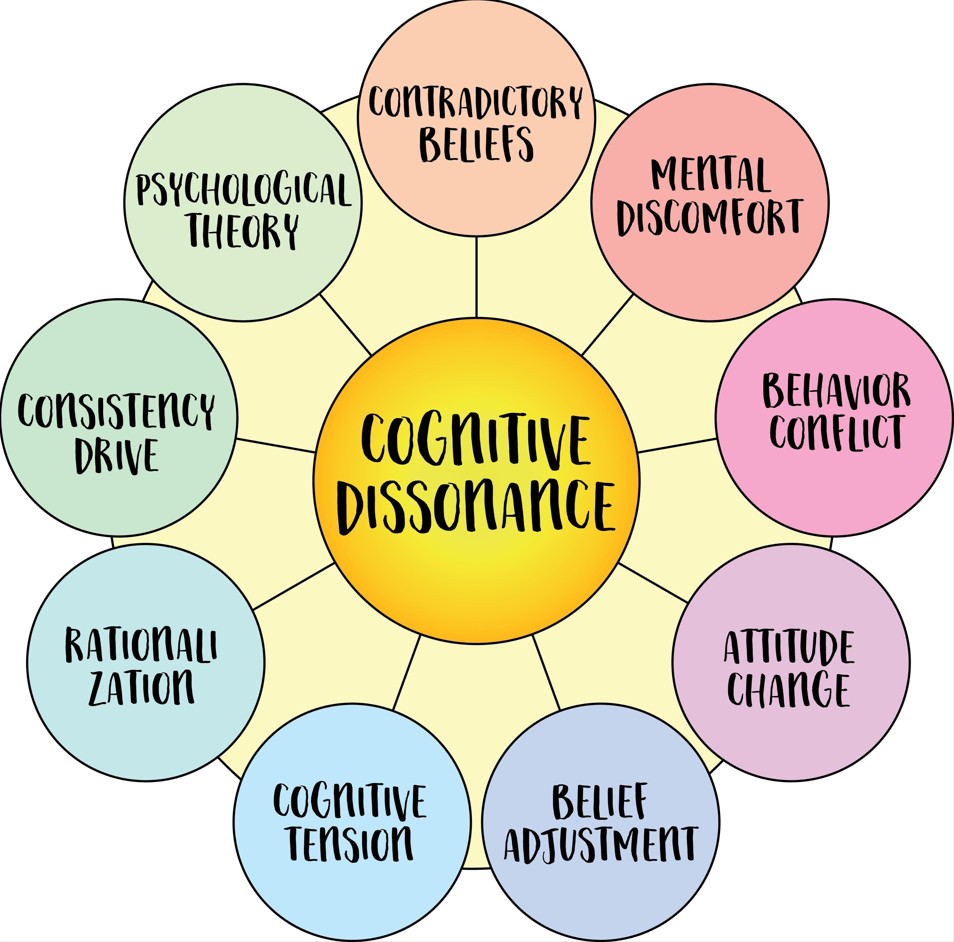
The primary driver of rationalization is cognitive dissonance, a theory developed by Leon Festinger. This theory posits that humans have a fundamental drive to maintain consistency between their beliefs, attitudes, and behaviors. When an individual holds two conflicting cognitions—such as “I am a healthy person” and “I just smoked a cigarette”—the brain experiences a state of high alert and discomfort.
To resolve this dissonance, the individual has three choices: change the behavior, change the belief, or rationalize the behavior. Because changing a behavior or a deeply held belief is difficult and requires significant effort, the mind often takes the path of least resistance: rationalization. In the cigarette example, the smoker might tell themselves, “I only smoke when I am stressed, and stress is worse for my heart than one cigarette,” or “Everyone dies of something anyway.” These justifications are not necessarily true, but they are effective at silencing the internal critic and allowing the behavior to continue without the burden of guilt.
The Two Faces of Rationalization: Sour Grapes and Sweet Lemons
Psychologists often categorize rationalization into two classic forms, inspired by Aesop’s fables. The first is known as the “Sour Grapes” approach. This occurs when an individual fails to achieve a goal and subsequently devalues the goal itself to protect their self-esteem. If a person is rejected for a promotion, they might rationalize the failure by claiming, “I didn’t really want the extra responsibility anyway; the management team is toxic.” By convincing themselves that the object of their desire was undesirable, they avoid the pain of feeling inadequate.
The second form is the “Sweet Lemon” approach. This involves overvaluing a negative situation or a poor outcome to make it seem like a hidden blessing. If someone buys a car that turns out to be a mechanical disaster, they might rationalize the purchase by saying, “This is actually great because it is teaching me how to do my own repairs and making me more resilient.” While finding a silver lining can be a positive coping strategy, it becomes a Sweet Lemon rationalization when it is used to avoid admitting a mistake or taking responsibility for a poor decision.
Rationalization in Moral and Ethical Decision-Making
One of the most dangerous applications of rationalization occurs in the realm of ethics. Most people consider themselves to be “good” or “honest.” However, when faced with an opportunity for personal gain through dishonest means, the brain often finds a way to permit the behavior while keeping the self-concept of “honesty” intact. This is often achieved through moral decoupling or externalization.
Common ethical rationalizations include phrases like “Everyone else is doing it,” “No one is really getting hurt,” or “The company makes so much money they won’t even miss this.” These justifications allow for the erosion of moral standards. Once a small transgression is rationalized, it becomes easier to rationalize a larger one, leading to what behavioral economists call the “slippery slope.” By reframing a dishonest act as a victimless or standard procedure, the individual bypasses their internal moral compass, allowing for ethical failures that would previously have been unthinkable to them.
The Social and Professional Cost of Self-Deception
While rationalization provides temporary emotional relief, the long-term costs are significant. In a professional setting, habitual rationalization prevents individuals from learning from their mistakes. If a project leader rationalizes a failure by blaming the market, the weather, or the client rather than examining their own strategic errors, they are doomed to repeat the same mistakes in the next project. This creates a culture of stagnation where growth is sacrificed at the altar of ego protection.
Socially, rationalization can damage relationships and erode trust. When a partner or friend constantly justifies their hurtful behavior with logical-sounding excuses, the other person feels unheard and gaslighted. The rationalizer becomes “unreachable” because they have built a fortress of logic that prevents any external feedback from penetrating. This lack of accountability makes it difficult to resolve conflicts or build the vulnerability required for deep human connection.
Breaking the Cycle: Moving Toward Radical Honesty
Overcoming the habit of rationalization requires a conscious commitment to radical honesty and the development of high emotional intelligence. The first step is to become aware of the physical and emotional sensations of cognitive dissonance. Often, dissonance feels like a slight tightening in the chest or a subtle sense of defensiveness when our actions are questioned. When this feeling arises, it should be treated as a signal to stop and investigate rather than as a cue to begin justifying.
Practicing intellectual humility is another vital tool. This involves acknowledging that our initial impulses are often driven by subconscious biases rather than objective logic. By adopting a “growth mindset,” we can begin to see failure and mistakes as data points for improvement rather than as threats to our identity. When we are no longer terrified of being “wrong” or “imperfect,” the need to rationalize begins to fade. We can simply state, “I made a mistake because I was impulsive,” or “I chose the easy path over the right one,” without the need for an elaborate logical cover story.
The Role of External Accountability
Because rationalization is an internal process of self-deception, it is often difficult to spot on our own. This is where external accountability becomes essential. Having a trusted mentor, a therapist, or a circle of honest friends can provide a “reality check” when our logic begins to drift into the realm of justification. These individuals can see the patterns that we are blind to.
Ultimately, the goal of understanding rationalization is not to eliminate it entirely—as it is a natural human tendency—but to reduce its power over our major life decisions. By choosing the temporary discomfort of honesty over the comfortable lie of rationalization, we regain the ability to navigate the world effectively. We transition from being passengers in a mind driven by defense mechanisms to being active participants in a life built on truth and intentionality.
FAQ about Rationalization
What is the difference between rationalization and a simple excuse?
A simple excuse is often a conscious statement made to others to explain a shortcoming, where the person might still privately know they are at fault. Rationalization, however, is a deeper form of self-deception. When you rationalize, you actually believe the “logic” you have created. It is not just a story for others; it is a story you have told yourself to protect your ego and maintain a consistent self-image.
Can rationalization ever be a good thing?
In the short term, rationalization can act as a psychological “shock absorber” during times of extreme stress or trauma. It can help a person keep moving forward when the full reality of a situation might be too overwhelming to process all at once. However, it becomes maladaptive when it is used as a permanent way to avoid reality, take responsibility, or learn from negative experiences.
How can I tell if someone else is rationalizing or being logical?
One of the clearest signs of rationalization is the presence of “motivated reasoning.” If a person’s logic seems to always lead back to a conclusion that absolves them of guilt or makes them look better, they are likely rationalizing. Another sign is emotional defensiveness; when a truly logical argument is challenged, the person usually remains calm and adjusts their view based on new data. When a rationalization is challenged, the person often becomes angry or doubles down on their original point.
Why is it so hard to stop rationalizing?
It is difficult because the brain is wired to avoid the pain of cognitive dissonance. Admitting that we were wrong, lazy, or dishonest requires us to rewrite our self-narrative, which is cognitively and emotionally demanding. Rationalization is a high-speed, automatic process that provides instant relief, making it a very “attractive” shortcut for the brain’s energy-saving systems.
Recommended Books
- Mistakes Were Made (But Not by Me) by Carol Tavris and Elliot Aronson
- The Honest Truth About Dishonesty by Dan Ariely
- A Theory of Cognitive Dissonance by Leon Festinger
- The Folly of Fools: The Logic of Deceit and Self-Deception in Human Life by Robert Trivers
- Radical Candor by Kim Scott