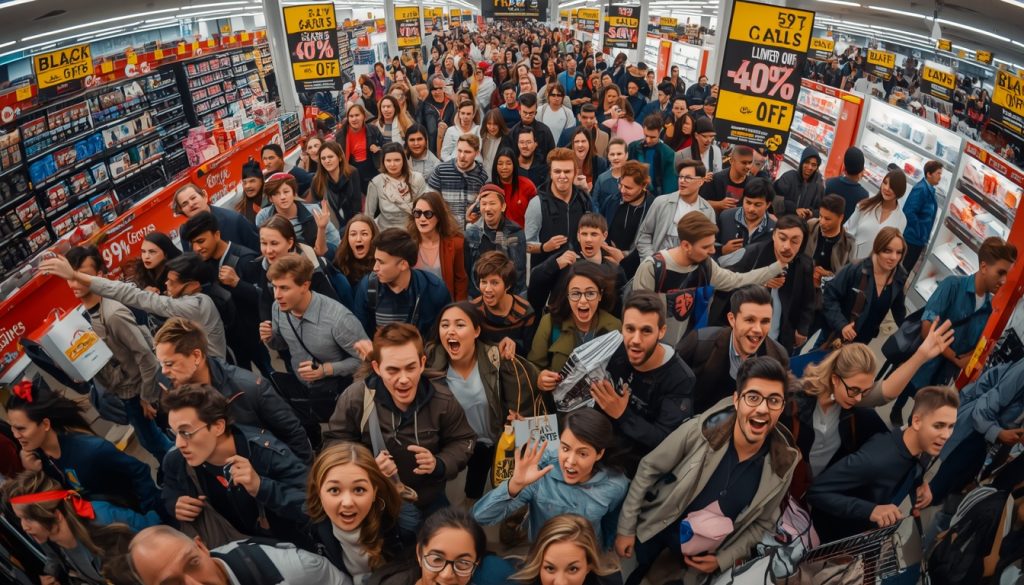

For decades, the global retail calendar has pivoted around a single post-holiday event: Black Friday. What began as a traditional commercial mark-down period has morphed into a high-stakes, hyper-stimulated public spectacle. Scenes of thousands of shoppers queuing through cold nights, charging through store doors at midnight, physically wrestling over discounted consumer electronics, and clearing retail shelves in minutes have become iconic symbols of modern consumer culture. While traditional economic theory suggests these shoppers are simply making rational financial decisions to maximize savings, behavioral psychology reveals a far more volatile dynamic at play.
The irrational, chaotic, and sometimes aggressive behaviors observed during major sales events cannot be explained solely by discount percentages. When individuals enter dense, highly charged consumer environments, individual decision-making and rational judgment frequently give way to collective psychological forces. By examining the emotional contagion that spreads through retail crowds, we can uncover how artificial scarcity, heightened arousal, and group dynamics manipulate human biology to turn ordinary shoppers into frantic participants.
Defining the Terminology: The Mechanics of Collective Arousal
To analyze why ordinary individuals engage in uncharacteristic or aggressive behavior during high-density shopping events, one must examine the core psychological frameworks that govern crowd dynamics and emotional transmission.
Understanding Emotional Contagion, Physiological Arousal, and Deindividuation
At the heart of crowd behavior is emotional contagion—the psychological and physiological process by which emotions, moods, and behavioral impulses spread rapidly across a group. Driven by mirror neuron systems in the human brain, individuals automatically mimic and absorb the emotional cues, facial expressions, vocal tones, and physical agitation of those surrounding them. In a chaotic retail environment, anxiety, urgency, and excitement spread instantly, transforming individual shoppers into a synchronized, emotionally reactive mass.
This rapid emotional transfer is amplified by physiological hyper-arousal. Loud ambient noise, bright lighting, physical overcrowding, and time-restricted deals trigger the body’s sympathetic nervous system, releasing cortisol and adrenaline. As heart rates increase and cognitive bandwidth narrows, the prefrontal cortex—responsible for impulse control and logical reasoning—becomes overwhelmed, leaving individuals reliant on reactive, survival-oriented instinctual responses.
Deindividuation and Manufactured Scarcity
As crowd density reaches a critical threshold, individuals experience deindividuation. In dense, anonymous crowds, a person’s sense of personal identity, self-awareness, and social accountability diminishes. Swept up in the collective’s momentum, individuals absorb the group’s temporary norms, making them far more likely to engage in pushy, aggressive, or inconsiderate behaviors they would strongly condemn in isolation.
This dynamic is deliberately activated by retailers through manufactured scarcity. By advertising doorbuster deals with strictly limited door stock and imposing countdown timers, retailers frame products not as available commodities, but as scarce resources under threat. The brain reinterprets a routine retail transaction as a competitive fight for survival, activating deeply rooted evolutionary instincts to secure resources before rivals can claim them.
Key Differences: Mindful Purchasing vs. Frenzied Crowd Dynamics
Evaluating consumer behavior during extreme promotional events requires contrasting intentional, self-directed shopping against the reactive, crowd-driven frenzy.
Targeted Acquisition vs. Competitive Conquest
A mindful consumer approach is centered on targeted acquisition. The shopper identifies a genuine, pre-existing need, researches the item’s baseline market value, sets a strict budget, and evaluates whether a discount justifies the purchase. The shopper judges the item strictly on its intrinsic utility, and the process remains calm, deliberate, and self-contained.
Crowd frenzy, by contrast, transforms shopping into a competitive conquest. The primary goal shifts from acquiring a useful product to outmaneuvering fellow shoppers. Winning the item becomes a psychological proxy for dominance, smartness, and speed. The item’s actual value or utility becomes secondary to the visceral satisfaction of seizing it from a competitive environment before someone else can.
Autonomy vs. Sympathetic Overdrive
Autonomous shopping relies on reflective cognitive processing. The consumer retains full emotional regulation, navigating retail spaces at a comfortable pace and remaining capable of walking away if conditions become chaotic or prices prove uncompetitive.
In contrast, frenzied crowd shopping forces the nervous system into sympathetic overdrive. Surrounded by surging crowds and urgent messaging, the consumer’s perception narrows to immediate threats and rewards. Panic replaces patience, leading shoppers to buy items they do not need, spend money they do not have, and view fellow human beings as obstacles to be bypassed.
Diagnostic Checklist: Assessing Your Susceptibility to Retail Frenzy
Recognizing whether your shopping habits during promotional events are guided by clear judgment or emotional contagion requires honest reflection. Consider the following diagnostic questions.
- Question One: Do you experience a rapid heartbeat, physical agitation, or an urgent compulsion to grab items the moment you enter a crowded store or high-stakes sale environment? Immediate physical agitation suggests your nervous system is absorbing the collective physiological arousal of the surrounding environment.
- Question Two: Have you ever purchased an item during a flash sale or doorbuster event that you had zero interest in five minutes prior? Buying unexpected items simply because they are marked down and surrounded by eager crowds is a classic symptom of scarcity-driven impulse buying.
- Question Three: Do you view other shoppers around you as competitors or adversaries rather than fellow community members? Viewing surrounding people as rivals signals that emotional contagion and manufactured scarcity have shifted your mindset into a threat-based resource battle.
- Question Four: Do you feel profound exhaustion, regret, or confusion once you leave the store and return to a quiet environment? A post-event emotional crash and confusion can occur when adrenaline levels drop, allowing your rational mind to confront the reality of your impulsive choices.
- Question Five: Do you find yourself buying items you cannot afford simply to avoid feeling like you missed out on an exclusive event? Prioritizing fear of missing out over financial stability suggests social proof and artificial urgency have overridden your long-term planning.
What Lies Beneath the Trend: Retail Architecture and Evolutionary Triggers
The chaos associated with Black Friday is far from accidental; it is meticulously engineered through retail spatial design, scarcity marketing, and evolutionary psychology.
Architectural Priming and Social Proof Manipulation
Retail environments are systematically designed to maximize sensory exposure and disorient cognitive control. Tight aisle layouts, bottleneck entrances, flashing promotional signage, and rhythmic, high-tempo background music are deliberate architectural choices. They disrupt logical evaluation and keep physical arousal elevated.
This setup is reinforced by the powerful psychological phenomenon of social proof. When people enter an uncertain or high-stress environment, they look to others’ actions to decide how to react. Seeing hundreds of people frantically running toward a specific display serves as immediate, non-verbal proof that the display contains something immensely valuable, prompting others to join the rush without stopping to evaluate why.
The Evolutionary Scarcity Trap
Throughout human evolutionary history, resources like food, shelter, and raw materials were genuinely scarce. Hesitating when resources became available often meant deprivation or starvation. Human biology evolved to respond to sudden resource availability with immediate action, heightened alertness, and aggressive acquisition drives.
Modern marketing systematically hijacks these ancient evolutionary safeguards. By staging artificial, time-bound events with limited stock, retailers trigger an evolutionary survival response within a modern context of abundance. The brain treats a discounted television or designer coat as a critical, limited resource, compelling the individual to fight for it before the opportunity vanishes.
Actionable Solutions: Navigating High-Stakes Sales with Autonomy
Protecting your financial well-being and nervous system during major sales events requires building deliberate barriers against emotional contagion and environmental manipulation.
To maintain full cognitive control and avoid falling trap to crowd panic, implement the following structured strategies.
- First, insulate yourself from physical crowd density. Whenever possible, opt to make planned purchases online from a quiet, controlled environment, or shop during off-peak hours. Removing yourself from physical crowds eliminates the mirror-neuron triggers that spread panic, adrenaline, and emotional contagion.
- Second, construct a strict, binding purchasing manifest before the event. Write down the exact items you intend to buy, along with your pre-determined maximum spending limit for each. Treat this manifest as an unalterable contract; if an item or price is not on the list, enforce an absolute prohibition against buying it, regardless of how attractive the discount appears.
- Third, implement a mandatory physical cooling-off routine during the sale. If you feel a sudden surge of urgency, excitement, or anxiety while holding an item, physically step away from the crowded display area. Find a quiet space, take slow, deep breaths for two minutes, and allow your heart rate to normalize before finalizing the decision to buy.
- Fourth, reframe discounts through an absolute financial lens. Never evaluate a sale by how much money you are allegedly saving; evaluate it strictly by how much real currency is leaving your bank account. Remind yourself that spending fifty dollars on an unneeded hundred-dollar item is not saving fifty dollars—it is losing fifty dollars.
Synthesis and Compassionate Self-Awareness
The intense chaos of Black Friday and major sales events exposes the fragility of human rational decision-making in the face of engineered crowd dynamics. Getting swept up in a frenzy or making an impulsive purchase does not mean you lack character or intelligence; it shows how powerful evolutionary biology and environmental priming can be when activated at once.
Achieving true consumer autonomy requires stepping back from manufactured urgency. By understanding the psychological mechanics of emotional contagion, scarcity traps, and crowd dynamics, you can insulate yourself from external manipulation, protect your peace of mind, and ensure that your purchases serve your genuine life goals rather than corporate profit margins.
FAQ About Black Friday and Crowd Psychology
Why do normally calm and polite people become aggressive during Black Friday sales?
When individuals enter dense, chaotic crowds, they experience deindividuation and physiological hyper-arousal. Elevated adrenaline levels narrow cognitive focus, while the perception of artificial scarcity activates evolutionary resource-competition drives. In this heightened state, personal social norms break down, and individuals act impulsively on group emotional cues rather than their standard personal values.
How do retailers manufacture artificial scarcity during promotional events?
Retailers create artificial scarcity by limiting stock of heavily discounted doorbuster items, imposing strict countdowns, and using urgent marketing language like limited time only or while supplies last. This design forces the brain to view transactions as competitive race scenarios, overriding rational evaluation with panic-driven buying.
Is shopping online during Black Friday completely safe from emotional contagion?
While shopping online eliminates physical crowd pressure and physical emotional contagion, e-commerce platforms recreate social panic digitally. They use live stock counters, notifications showing how many people are viewing an item, limited-time flash sales, and targeted countdown banners to induce fear of missing out and trigger impulsive purchasing.
What is the psychological reason behind post-purchase regret after major sales?
Post-purchase regret occurs when the adrenaline and physiological arousal of the shopping event wear off. During the frenzy, the brain is dominated by reactive, emotional processing. Once the consumer returns to a quiet environment, the prefrontal cortex regains control, allowing the individual to evaluate the purchase logically and recognize that the item was unnecessary or financially unwise.
How can I help a family member who habitually overspends during sales events?
Support your family member by encouraging them to make a strict shopping list and budget before the event begins. Offer to accompany them to provide a grounding, calm presence, or suggest shopping during non-peak hours. Frame discussions around long-term financial goals and emotional well-being rather than using judgment, helping them recognize the underlying stress triggers that drive impulse buying.
Recommended Books on the Subject
- The Crowd: A Study of the Popular Mind by Gustave Le Bon
- Influence: The Psychology of Persuasion by Robert B. Cialdini
- Predictably Irrational: The Hidden Forces That Shape Our Decisions by Dan Ariely
- Thinking, Fast and Slow by Daniel Kahneman
- Scarcity: Why Having Too Little Means So Much by Sendhil Mullainathan and Eldar Shafir