

Reinforcement is a fundamental principle of behavioral psychology that describes how the consequences of a behavior influence its future frequency. At its core, the concept is built on the law of effect, which suggests that actions followed by pleasant consequences are likely to be repeated, while those followed by unpleasant consequences are less likely to occur again. This mechanism is not merely an academic theory but a biological necessity, allowing organisms to adapt to their environments by learning which actions lead to survival and reward. In the modern world, reinforcement remains the primary engine behind everything from classroom management and athletic training to the addictive design of digital interfaces.
To study reinforcement is to examine the relationship between a stimulus and a response. Unlike simpler forms of learning, reinforcement focuses on operant behavior—actions that are voluntary and operate on the environment to produce a specific outcome. By strategically applying or removing stimuli, choice architects and behavioral scientists can shape complex patterns of behavior over time. Understanding this process requires a deep dive into the distinctions between positive and negative reinforcement, the schedules upon which they are delivered, and the ethical implications of using these tools to steer human action.
The Dual Pillars: Positive and Negative Reinforcement
The most common misconception regarding reinforcement is the confusion between negative reinforcement and punishment. In psychological terms, reinforcement always aims to increase the likelihood of a behavior, whereas punishment aims to decrease it. The terms positive and negative do not refer to the quality of the experience, but to the mathematical action taken: positive means adding a stimulus, and negative means removing one.
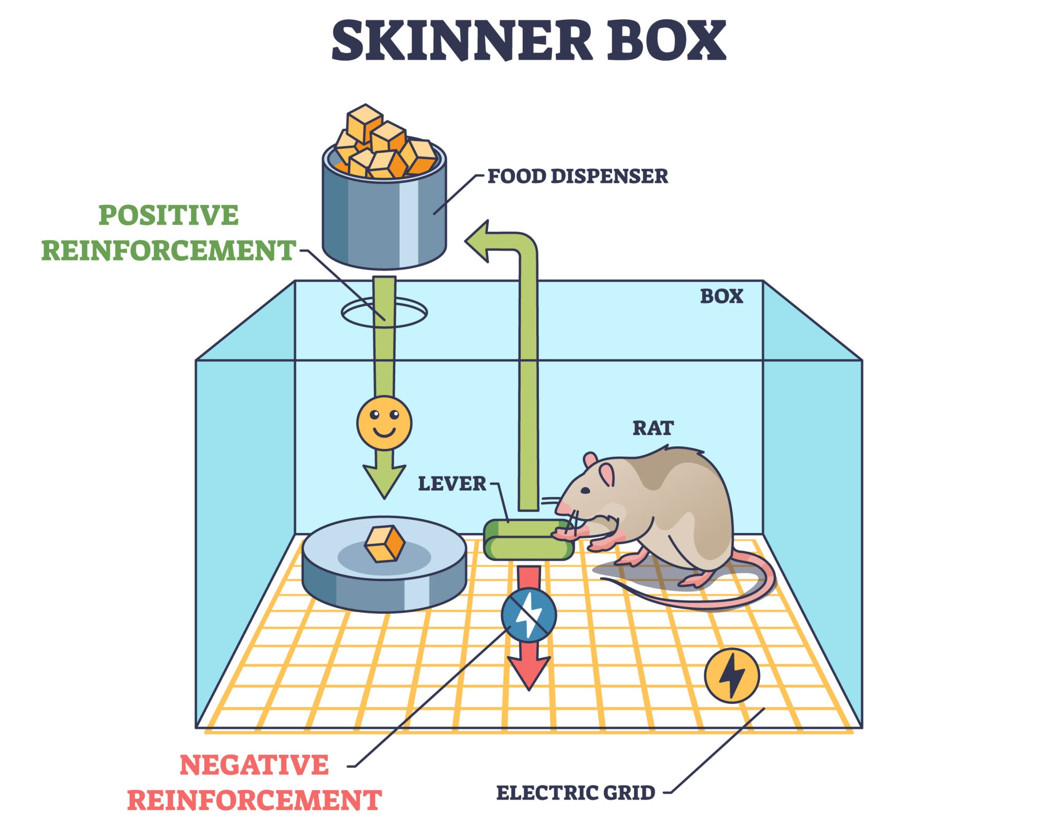
Positive reinforcement occurs when a desirable stimulus is presented after a behavior, making that behavior more likely to happen in the future. This could be a child receiving praise for completing homework or an employee receiving a bonus for meeting a quota. The brain associates the effort with the reward, reinforcing the neural pathways involved in the action. Conversely, negative reinforcement involves the removal of an aversive or unpleasant stimulus following a behavior. A classic example is the annoying beep of a car seatbelt reminder that only stops once the belt is buckled. In this case, the behavior of buckling up is reinforced because it provides an escape from a negative state.
Both methods are highly effective, but they produce different psychological states. Positive reinforcement is generally associated with increased motivation and a sense of achievement. Negative reinforcement, while effective for compliance, can sometimes foster a sense of avoidance or anxiety, as the individual is constantly acting to prevent a negative outcome rather than pursuing a positive one.
Schedules of Reinforcement and the Persistence of Action
How often and when a behavior is reinforced is just as important as the reinforcement itself. These patterns are known as schedules of reinforcement, and they dictate how quickly a behavior is learned and how resistant it is to extinction. In the early stages of learning a new skill, continuous reinforcement—where every correct action is rewarded—is most effective. This provides the clear feedback necessary for the brain to establish a new connection.
However, once a behavior is established, partial or intermittent reinforcement becomes far more powerful. There are four primary types of partial schedules: fixed-ratio, variable-ratio, fixed-interval, and variable-interval. A fixed-ratio schedule provides a reward after a set number of responses, such as a factory worker paid for every ten items produced. A fixed-interval schedule reinforces behavior after a set period of time has passed, like a monthly paycheck. While these are reliable, they often lead to a post-reinforcement pause, where effort drops immediately after the reward is received.
The most potent of these is the variable-ratio schedule, where reinforcement is delivered after an unpredictable number of responses. This is the mechanism behind slot machines and social media notifications. Because the individual never knows which specific action will trigger the reward, they continue the behavior at a high and steady rate, hoping the next attempt is the winner. This unpredictability makes the behavior highly resistant to extinction, explaining why habits formed under variable conditions are so difficult to break.
The Biological Foundation: Dopamine and the Brain
The effectiveness of reinforcement is rooted in the brain’s reward system, primarily the mesolimbic dopamine pathway. When a behavior results in reinforcement, a surge of dopamine is released, signaling to the brain that the event was significant and worth repeating. This chemical signal does not just provide pleasure; it functions as a teaching mechanism. It helps the brain predict future rewards based on environmental cues.
Over time, the dopamine release shifts from the reward itself to the cue that precedes it. This is why the mere sound of a notification can be as reinforcing as the message itself. This biological hijacking is what allows reinforcement to become an unconscious driver of behavior. When an environment is rich with cues that have been paired with intermittent rewards, the individual can find themselves engaged in repetitive behaviors without ever making a conscious decision to do so. This underscores the power of reinforcement as a tool for both growth and potential manipulation.
Shaping and the Complexity of Behavior
Reinforcement is rarely used to teach a complex behavior all at once. Instead, psychologists use a process called shaping, or the method of successive approximations. This involves reinforcing small steps that gradually lead to the final desired behavior. For instance, in speech therapy, a therapist might first reinforce any sound a child makes, then only sounds that resemble words, and finally only complete words.
This incremental approach respects the cognitive limits of the learner and prevents frustration. By keeping the reinforcement frequent in the beginning and slowly raising the bar, choice architects can lead individuals to perform tasks that would have seemed impossible at the start. However, this same principle can be used negatively in grooming behaviors or in the slow escalation of commitment seen in high-pressure sales environments, where small, reinforced “yeses” lead to a final, significant concession.
The Ethics of Reinforcement in Society
As we gain a more sophisticated understanding of reinforcement, ethical questions regarding its application become more pressing. In many ways, modern society is a giant experiment in reinforcement. From the gamification of education to the performance metrics used in the workplace, we are constantly being steered by reinforcement structures. While these can be used to foster healthy habits, they can also be used to bypass an individual’s conscious values.
The concern arises when reinforcement is used to create dependency rather than autonomy. If a person only performs a “good” action because they are seeking an external reward, they may stop that behavior the moment the reward is removed. This is known as the overjustification effect, where external reinforcement can actually undermine intrinsic motivation. True psychological health requires a balance where reinforcement is used to build competence, which eventually leads to the individual finding the activity itself reinforcing.
Navigating a Reinforced World
To maintain agency in a world designed for reinforcement, one must become aware of the reward structures currently in place. This involves identifying the “carrots” and “sticks” that drive daily habits. Are you checking your phone because you have a specific task, or are you seeking a variable-ratio dopamine hit? Are you working late because you value the project, or because you are caught in a cycle of negative reinforcement, fearing the consequences of stopping?
By recognizing these patterns, individuals can begin to redesign their own reinforcement schedules. This might involve introducing small, healthy rewards for difficult tasks or creating barriers to behaviors that are reinforced by unhealthy stimuli. Understanding reinforcement allows us to move from being reactive organisms to being the architects of our own behavior, using the same principles that once controlled us to instead build a life aligned with our deeper intentions.
FAQ
Does reinforcement only work on children and animals?
Reinforcement is a universal biological principle that applies to all organisms with a nervous system, including adult humans. While the types of reinforcers change as we age—moving from physical rewards like treats to social and abstract rewards like status, money, or a sense of accomplishment—the underlying mechanism remains the same. Adults are constantly being reinforced by their professional environments, social interactions, and digital experiences, often without conscious awareness of the process.
What is the difference between reinforcement and bribery?
The primary difference lies in the timing and the intent. Bribery is typically offered before a behavior occurs to influence a specific decision, often involving an element of negotiation or illicit intent. Reinforcement is delivered after a behavior has occurred to strengthen that behavior over the long term. While both involve rewards, reinforcement is a systematic tool used in learning and behavioral change, whereas bribery is a transactional event focused on a single outcome.
Why does a behavior sometimes get worse before it stops when reinforcement is removed?
This phenomenon is known as an extinction burst. When a behavior that was previously reinforced no longer produces a reward, the individual often increases the frequency or intensity of the behavior in a desperate attempt to get the reward back. If you press a button to open a door and it doesn’t work, you likely press it harder and faster several times before giving up. Understanding this is crucial for parents or managers; if they give in during the burst, they accidentally reinforce the more intense, “worse” behavior.
Can negative reinforcement be a good thing?
Yes, negative reinforcement is a natural part of survival and personal growth. For example, the discomfort of a cold wind reinforces the behavior of putting on a coat, which protects your health. In a professional setting, the desire to remove the stress of a looming deadline can reinforce the behavior of starting a project early. The key is ensuring that the negative stimulus is not so overwhelming that it causes chronic stress or prevents the individual from learning the desired skill.
Recommended Books
- Science and Human Behavior by B.F. Skinner
- Don’t Shoot the Dog! The New Art of Teaching and Training by Karen Pryor
- The Power of Habit by Charles Duhigg
- Atomic Habits by James Clear
- The Joy of Living: Unlocking the Secret and Science of Happiness by Yongey Mingyur Rinpoche